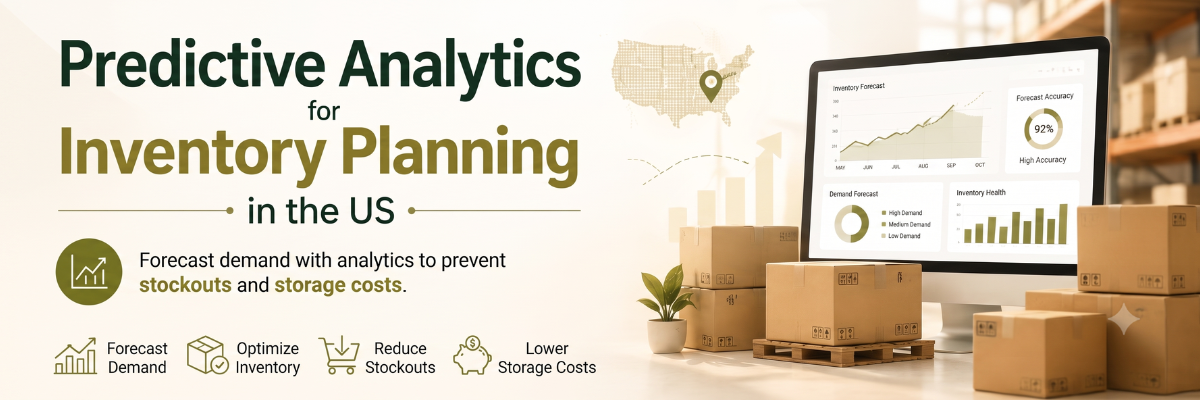
Predictive Analytics for Inventory Planning in the US: Building Smarter Ecommerce Operations
Inventory management has become one of the biggest challenges for US ecommerce businesses. Overstocking ties up capital, while stockouts lead to missed sales opportunities, poor customer experiences, and lower marketplace rankings. With increasing competition across platforms like Amazon, Walmart, and other online marketplaces, businesses need smarter ways to plan inventory.
This is where predictive analytics for inventory planning helps brands make data-driven decisions. By analyzing historical sales data, customer demand patterns, seasonal trends, and market behavior, businesses can forecast future inventory needs and maintain the right stock levels.
For sellers looking to scale efficiently, adopting Amazon predictive inventory USA strategies can improve supply chain visibility, reduce operational costs, and create a more reliable ecommerce growth system.
What Is Predictive Analytics in Inventory Planning?
Predictive analytics uses advanced data analysis, machine learning, and historical trends to forecast future outcomes. In ecommerce inventory management, it helps businesses understand:
- Which products will have higher demand
- When inventory needs replenishment
- How seasonal changes affect sales
- Which products may become slow-moving stock
- How much inventory should be stored for upcoming demand
Instead of relying on assumptions or manual calculations, businesses can use real-time data insights to make accurate inventory decisions.
Why Inventory Forecasting Matters for US Ecommerce Businesses
The US ecommerce market is highly competitive, where customers expect fast delivery and consistent product availability. Poor inventory planning can directly impact revenue and marketplace performance.
1. Preventing Stockouts
Running out of popular products can result in:
- Lost sales opportunities
- Lower product rankings
- Negative customer reviews
- Reduced marketplace visibility
Predictive analytics helps sellers identify upcoming demand increases and maintain sufficient inventory before stock levels become critical.
For Amazon sellers, Amazon predictive inventory USA solutions can help analyze sales velocity, seasonality, and reorder requirements to avoid unexpected shortages.
2. Reducing Excess Inventory and Storage Costs
Overstocking creates unnecessary expenses, including:
- Warehouse storage fees
- Unsold inventory costs
- Reduced cash flow
- Increased risk of outdated products
With accurate demand forecasting, businesses can maintain optimized inventory levels and invest resources where they generate the highest returns.
How Predictive Analytics Improves Ecommerce Operations
Modern ecommerce operations depend on accurate data. Predictive analytics connects multiple data points to create actionable inventory strategies.
Sales Trend Analysis
Businesses can analyze past sales performance to identify purchasing patterns. For example:
- Holiday demand increases
- Seasonal product trends
- Customer buying behavior
- Product lifecycle changes
These insights allow sellers to prepare inventory before demand rises.
Demand Forecasting
Demand forecasting helps businesses estimate future sales based on historical and current market data.
Factors considered include:
- Previous sales performance
- Market trends
- Advertising performance
- Customer searches
- Competitor activity
- Seasonal demand
This creates a more predictable inventory planning process.
Automated Reordering Decisions
Manual inventory monitoring can become difficult as product catalogs grow. Predictive systems can identify when products reach their reorder points and recommend purchase quantities.
This improves:
- Supply chain efficiency
- Supplier coordination
- Inventory turnover rates
- Overall ecommerce operations
The Role of Data in Modern Ecommerce Operations
Successful ecommerce brands use data as a foundation for every decision. Inventory planning is no longer just about tracking available stock; it requires understanding customer demand and market movement.
Effective ecommerce operations depend on combining:
- Marketplace sales data
- Customer behavior insights
- Advertising performance
- Inventory history
- Product profitability
When these insights work together, businesses can create a scalable inventory strategy that supports long-term growth.
Predictive Analytics for Amazon Sellers
Amazon sellers face unique inventory challenges due to fast-moving sales cycles, ranking competition, and fulfillment requirements.
Predictive inventory strategies help Amazon sellers:
- Maintain optimal FBA inventory levels
- Reduce storage fees
- Improve product availability
- Plan seasonal inventory
- Avoid emergency restocking
By implementing Amazon predictive inventory USA practices, sellers can improve operational efficiency while maintaining better customer satisfaction.
Benefits of Data-Driven Inventory Planning
Using predictive analytics provides several advantages:
Better Forecast Accuracy
Businesses can make inventory decisions based on actual data rather than guesswork.
Lower Operational Costs
Optimized inventory reduces unnecessary storage and purchasing expenses.
Improved Customer Experience
Maintaining product availability ensures customers can purchase when demand is high.
Smarter Business Growth
Data-driven decisions allow brands to scale without creating unnecessary operational challenges.
Future of Inventory Management in Ecommerce
As ecommerce continues to evolve, businesses will increasingly rely on automation and artificial intelligence for inventory decisions. Predictive analytics will become essential for brands managing multiple marketplaces and expanding across regions.
Companies that adopt advanced inventory forecasting methods will have a competitive advantage by reducing costs, improving efficiency, and responding faster to customer demand.
Conclusion
Predictive analytics is transforming how US ecommerce businesses manage inventory. By using historical data, demand forecasting, and automated insights, brands can prevent stockouts, reduce storage costs, and improve overall operations.
For growing marketplace sellers, investing in Amazon predictive inventory USA strategies and advanced ecommerce operations solutions is a powerful step toward building a more efficient and scalable business.