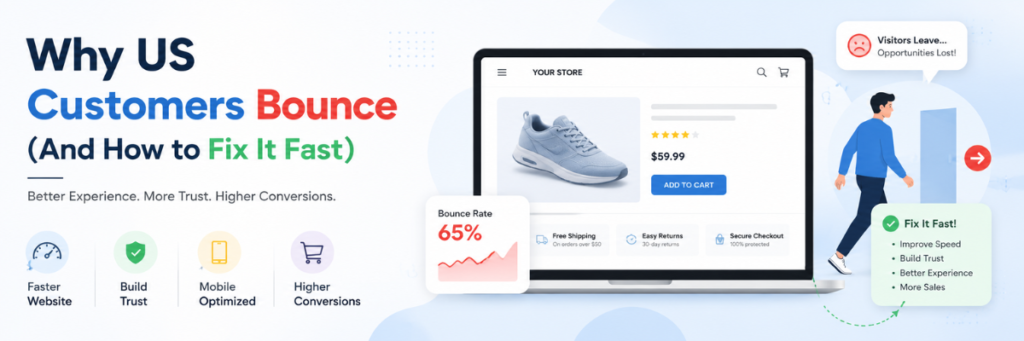
In today’s highly competitive online marketplace, attracting traffic is only half the battle. The real challenge begins when visitors land on your website or marketplace listing and leave within seconds without taking any action. This behavior is known as a “bounce,” and for many ecommerce businesses in the United States, high bounce rates silently destroy conversions, ad performance, and long-term profitability.
US customers have become extremely selective. They expect fast-loading websites, trustworthy branding, smooth navigation, optimized product pages, and a frictionless buying experience. If any part of that experience feels confusing, slow, outdated, or unprofessional, customers leave immediately and often never return.
This is why brands increasingly invest in professional Ecommerce account management services to improve customer retention, increase conversion rates, and build a stronger online shopping experience across marketplaces and ecommerce platforms.
What Is Bounce Rate in Ecommerce?
Bounce rate refers to the percentage of visitors who leave your website or marketplace listing without interacting further. In simple terms, they visit one page and exit without clicking, exploring, or purchasing.
A high bounce rate often signals that something is wrong with the customer experience.
For ecommerce brands targeting US buyers, bounce rates can directly impact:
- Conversion rates
- Ad campaign profitability
- SEO rankings
- Customer trust
- Brand credibility
- Repeat purchase behavior
Understanding why customers bounce is the first step toward fixing the problem quickly.
Why US Customers Bounce So Fast
1. Slow Website Speed
US shoppers expect instant loading. Even a delay of a few seconds can cause users to abandon a page before it fully opens.
Common speed issues include:
- Heavy images
- Poor hosting
- Unoptimized code
- Too many popups
- Slow mobile responsiveness
Fast websites create confidence, while slow websites create frustration.
2. Weak Product Presentation
Customers make buying decisions visually. Poor-quality product images, unclear descriptions, or missing information immediately reduce trust.
Your product page should answer:
- What is the product?
- Why should customers buy it?
- What problem does it solve?
- Why is it better than competitors?
Professional product optimization through marketplace account management services helps improve product clarity and customer confidence.
3. Confusing Navigation
US buyers prefer clean and intuitive shopping experiences. If visitors struggle to find categories, product details, shipping information, or return policies, they leave quickly.
Simple navigation improves:
- User experience
- Product discovery
- Session duration
- Conversion opportunities
4. Lack of Trust Signals
Trust is one of the biggest conversion drivers in ecommerce.
Customers bounce when they do not see:
- Product reviews
- Secure payment badges
- Clear return policies
- Contact information
- Authentic brand identity
- Social proof
Building trust signals across your ecommerce ecosystem significantly improves customer retention.
5. Poor Mobile Experience
A massive portion of US ecommerce traffic comes from mobile devices. If your store is not mobile-optimized, users will leave almost immediately.
Common mobile issues include:
- Misaligned layouts
- Tiny text
- Difficult checkout process
- Slow mobile speed
- Broken design elements
A smooth mobile experience is no longer optional in modern ecommerce.
6. Aggressive Popups and Ads
Too many popups create friction. While lead generation matters, overwhelming visitors with instant discount popups, notifications, and ads often increases bounce rates.
The goal is to guide customers naturally, not interrupt their shopping journey.
7. Mismatch Between Ads and Landing Pages
Many ecommerce businesses drive traffic through Google Ads, Meta Ads, or Amazon Sponsored campaigns. However, if the landing page does not match the promise of the advertisement, customers leave instantly.
For example:
- Ad promotes discounts → Landing page shows full pricing
- Ad promises premium quality → Product images look low quality
- Ad targets specific products → Landing page feels generic
Consistency improves buyer trust and conversion probability.
How to Fix Ecommerce Bounce Rate Fast
Improve Website Speed Immediately
Optimize:
- Image sizes
- Website scripts
- Mobile responsiveness
- Hosting performance
- Cache systems
Faster websites create smoother shopping experiences and reduce abandonment.
Upgrade Product Content
Strong product pages should include:
- High-quality images
- Lifestyle visuals
- Clear benefits
- Optimized bullet points
- SEO-friendly descriptions
- FAQ sections
This is where professional e-commerce account management becomes valuable for scaling brands effectively.
Simplify User Experience
Focus on:
- Clean layouts
- Easy navigation
- Clear categories
- Minimal distractions
- Faster checkout processes
Customers should reach checkout with as few clicks as possible.
Build Strong Trust Signals
Add:
- Verified reviews
- Secure checkout badges
- Return guarantees
- Customer testimonials
- Real brand information
- Transparent shipping details
Trust reduces hesitation and increases conversion rates.
Optimize for Mobile First
Test your store regularly across:
- iPhone devices
- Android devices
- Tablets
- Different screen sizes
A mobile-first strategy is essential for modern ecommerce growth.
Align Ads With Landing Pages
Ensure your:
- Messaging
- Pricing
- Product visuals
- Offers
- Branding
remain consistent from advertisement to final checkout page.
Consistency improves buyer confidence and reduces bounce behavior.
Why Professional Ecommerce Management Matters
Many brands focus only on generating traffic while ignoring customer experience optimization. But sustainable ecommerce growth requires a complete operational strategy.
Professional Ecommerce account management services help businesses:
- Optimize product listings
- Improve customer experience
- Manage advertising campaigns
- Increase conversion rates
- Reduce bounce rates
- Strengthen marketplace visibility
- Improve long-term profitability
Instead of treating bounce rate as a technical issue, successful brands treat it as a customer experience problem.
Final Thoughts
US customers move quickly, compare aggressively, and expect premium digital experiences from ecommerce brands. If your website or marketplace listing feels slow, confusing, untrustworthy, or poorly optimized, customers leave within seconds.
Reducing bounce rates is not about one single fix. It requires improvements in speed, trust, content quality, navigation, mobile experience, and customer psychology.
Brands that invest in strong customer experience systems consistently outperform competitors in both conversions and long-term growth.
Whether you sell through Shopify, Amazon, Walmart, or other marketplaces, optimizing every stage of the buyer journey is the key to turning visitors into paying customers.