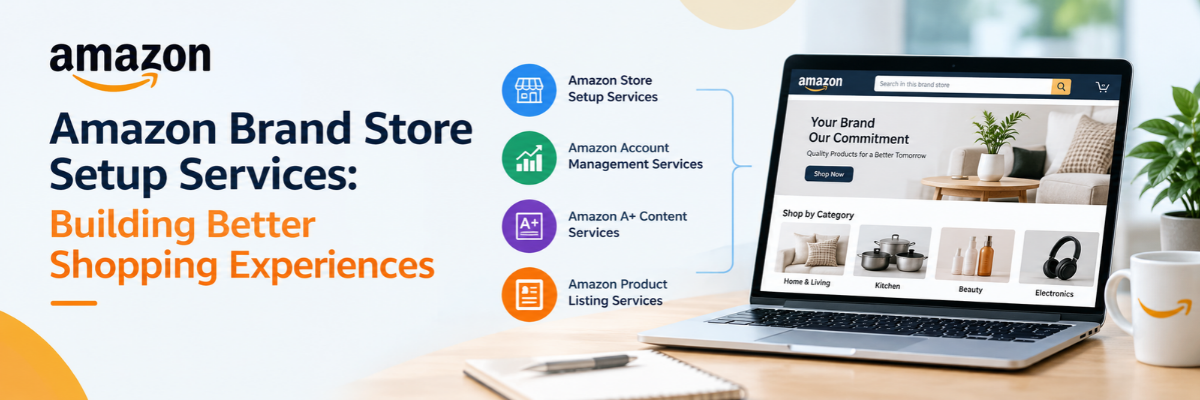
Building a successful brand on Amazon requires more than listing products and competing on price. Businesses need a consistent brand identity, clear product organization, and a shopping experience that helps customers understand their offerings. An Amazon Brand Store provides a dedicated space to bring these elements together.
For businesses selling in the United States, a professionally designed storefront can help communicate brand values, organize product collections, and make it easier for shoppers to discover relevant items. Instead of relying exclusively on individual product listings, brands can create a central destination where customers explore their products and learn more about the business.
Professional Amazon Brand Store setup services help sellers build storefronts that combine visual branding, intuitive navigation, and relevant product content. When supported by effective marketplace management, an optimized storefront can contribute to a more consistent customer experience and a stronger brand presence on Amazon.
What Is an Amazon Brand Store?
An Amazon Brand Store is a customizable storefront within Amazon that allows eligible brands to showcase their products, categories, and brand information in one place.
Brands can use available page layouts, images, videos, product collections, and content modules to organize their offerings. This creates an opportunity to present products in a structured way instead of depending entirely on individual product detail pages.
For example, a home furnishings brand might organize its storefront into bedding, curtains, cushions, and living room accessories. A beauty brand could create separate sections for skincare, makeup, and featured collections.
This organization helps customers browse products according to their interests and discover additional items within the same brand.
A well-planned Amazon Brand Store can help businesses:
Establish a recognizable brand identity.
Organize large product catalogs into relevant categories.
Improve product discovery and navigation.
Present product collections in a consistent format.
Support eligible Amazon advertising campaigns.
Create a more cohesive shopping experience.
However, a storefront does not automatically generate sales. Its performance depends on product quality, pricing, demand, traffic, availability, and the overall customer experience.
Why Amazon Brand Store Optimization Matters for US Businesses
The US Amazon marketplace is highly competitive across categories such as home goods, beauty, electronics, apparel, and consumer products. Brands need to communicate their value clearly to stand out from similar offerings.
An optimized Brand Store provides another opportunity to demonstrate what makes a business different while helping customers navigate its product range.
1. Build a Consistent Brand Identity
A recognizable brand identity helps customers understand who you are and what your business offers.
Your Amazon storefront should use consistent visual elements, including brand colors, logos, typography, imagery, and messaging. These elements should work together to create a clear presentation across the homepage and category pages.
For example, a brand specializing in sustainable household products may emphasize its product materials, intended uses, and relevant sustainability information. A fashion brand may focus on collections, styles, and occasions.
The content should reflect the brand’s actual products and values rather than relying on generic promotional language.
Professional design and accurate messaging can help establish credibility, although customer trust also depends on product quality, reviews, pricing, and reliable service.
2. Make Product Discovery Easier
Customers often visit Amazon while comparing several products or exploring a category without knowing exactly what they want.
A well-organized storefront can make this process easier by grouping related products and providing clear navigation.
Consider a kitchenware seller offering cookware, storage containers, utensils, and baking accessories. Separate category pages can help customers navigate directly to the products relevant to their needs.
This approach is particularly useful for brands with extensive catalogs. Instead of presenting every product on a single page, businesses can create a logical structure that supports browsing.
3. Create a More Professional Shopping Experience
The design of a storefront influences how customers interact with its content.
Overcrowded pages, inconsistent images, unclear category names, and excessive promotional messaging can make browsing difficult. A clean layout with clear headings and relevant product selections provides a more straightforward experience.
The goal is to help shoppers understand the brand, identify relevant products, and navigate to the appropriate product detail pages without unnecessary confusion.
A professional storefront should prioritize usability alongside visual appeal.
4. Support Amazon Advertising Efforts
Amazon Brand Stores can complement eligible advertising campaigns by providing a destination where customers explore a brand’s wider product range.
For example, a Sponsored Brands campaign promoting a collection of home organization products may direct shoppers to a relevant storefront page rather than a single product detail page, where the campaign format permits.
The landing page should align with the advertisement’s message. Customers who click an ad for a specific category should be able to find that category quickly.
Although a well-organized storefront can support the customer journey, advertising results also depend on targeting, bidding, competition, product appeal, and campaign management.
Essential Elements of an Effective Amazon Brand Store
An effective storefront requires a combination of visual consistency, relevant content, and practical navigation. Each element should serve a clear purpose in helping customers explore the brand.
1. A Clear and Informative Homepage
The homepage introduces the brand and directs customers toward its main product categories.
It should communicate what the business sells and make important sections easy to find. Depending on the brand’s needs, the homepage may include:
Brand logo and appropriate header imagery.
A concise introduction to the business.
Links to major product categories.
Featured products or collections.
Relevant lifestyle images.
Seasonal or promotional collections where appropriate.
Avoid overcrowding the homepage with every product or promotional message. Focus on the categories and products most relevant to the brand’s objectives.
2. Well-Organized Category Pages
Category pages help customers navigate a product catalog efficiently.
Brands should group products according to relevant characteristics, such as product type, intended use, collection, or customer needs. Category names should be clear and familiar to the target audience.
For example, a furniture brand could organize its catalog into bedroom furniture, living room furniture, dining furniture, and office furniture.
Each category page should provide a logical selection of products and use relevant visuals to help customers understand what they will find.
A scalable category structure also makes it easier to maintain the storefront as new products are introduced.
3. High-Quality Visual Content
Images and videos can communicate product information that is difficult to explain through text alone.
Lifestyle imagery helps demonstrate how products may be used, while product-focused visuals can highlight features, materials, dimensions, or design details.
Brands should use clear, accurate images that align with Amazon’s current content requirements. Visuals should represent the actual products and avoid unsupported claims or misleading representations.
Consistent imagery across the storefront also helps create a recognizable brand presentation.
4. Relevant Product Collections
Product collections can help customers discover related items and explore a brand’s catalog more efficiently.
Depending on the business, collections may include bestsellers, new arrivals, seasonal products, complementary items, or products organized by use.
For instance, a home décor brand could feature coordinated collections of cushions, throws, and decorative accessories. A beauty business could group products by category or intended routine.
Review featured collections regularly to ensure they remain relevant, available, and aligned with the storefront’s objectives.
5. Clear Brand Storytelling
Customers may want to understand a brand’s background, specialization, and approach before choosing a product.
An Amazon Brand Store can provide relevant information about the business and its offerings. This content should be specific, accurate, and useful to the customer.
Rather than using broad claims, explain what the brand sells, how its products meet customer needs, and what distinguishes its product range.
Effective storytelling provides context without distracting shoppers from product discovery.
6. Mobile-Friendly Storefront Design
Mobile usability is an important consideration when building an Amazon storefront.
Pages should be easy to navigate on smaller screens, with readable text, clear headings, appropriately sized images, and a logical content sequence.
Brands should preview their storefront on different screen sizes before publishing. Check that navigation works correctly, images display as intended, and important product categories remain accessible.
A storefront that works well across devices provides a more consistent browsing experience.
How Amazon Brand Store Setup Services Help Brands Grow
Building a storefront involves more than selecting a template and uploading images. Businesses need to plan their product hierarchy, develop content, organize pages, and ensure the finished experience supports their marketplace objectives.
Professional Amazon store setup services can help businesses manage these activities through a structured process.
Step 1: Review the Brand and Product Catalog
The first step is to understand the business, its target customers, product categories, and current Amazon presence.
This review helps identify the products that should receive priority and the most logical way to organize the storefront.
It can also reveal opportunities to improve existing product information or reorganize categories before the store is built.
Step 2: Plan Store Architecture
Store architecture defines how customers move through the storefront.
This includes planning the homepage, category pages, subcategories, and product collections. The structure should reflect the catalog while making navigation intuitive for customers.
For businesses with large product ranges, careful planning can prevent unnecessary complexity and make future updates easier.
Step 3: Develop Visuals and Store Content
Once the structure is established, the next stage involves developing the content for each page.
This may include banner images, category graphics, product selections, introductory text, and supporting brand information.
Content should be consistent with the brand’s identity and focused on helping customers understand the product range.
All claims and visual elements should comply with Amazon’s applicable content policies.
Step 4: Build and Optimize Store Pages
The approved structure and content are then implemented using Amazon’s available Brand Store tools and modules.
This stage includes arranging page elements, linking relevant products, checking navigation, and reviewing the overall presentation.
The storefront should be checked for missing products, broken links, outdated information, and layout issues before publication.
Step 5: Monitor Performance and Make Improvements
Optimization continues after the storefront launches.
Brands can use available Store Insights and relevant advertising and sales reports to assess traffic, shopper engagement, and attributed sales.
The findings can help identify opportunities to improve category organization, product selection, and traffic destinations.
A regular review process helps businesses adapt their storefront as their catalog, campaigns, and customer needs change.
How Amazon Product Listing Services Support Storefront Performance
An Amazon Brand Store helps customers explore the wider brand, but individual product detail pages remain central to the purchasing decision.
When shoppers select a product from a storefront, the linked listing should provide clear and accurate information about its features, benefits, specifications, and intended use.
Professional Amazon product listing services can support improvements to product titles, bullet points, descriptions, images, keyword relevance, and other supported listing elements.
The storefront and product pages should work together. Product names, visual presentation, and key messaging should remain consistent throughout the shopping journey.
For example, a brand featuring a kitchen storage collection in its storefront should ensure that the linked listings accurately explain product dimensions, materials, capacity, and other relevant details.
This consistency helps customers move from product discovery to product evaluation with a clearer understanding of what they are considering.
The Role of Amazon A+ Content Services in Brand Presentation
Amazon A+ Content provides eligible sellers and vendors with additional content options for supported product detail pages.
Depending on eligibility and available features, brands may be able to use enhanced images, comparison charts, structured content modules, and other visual elements to explain their products.
Professional Amazon A+ content services can help businesses present product information in a more organized and visually engaging format.
While a Brand Store introduces the wider brand and its collections, A+ Content can provide more detailed information about individual products.
For example, a furniture brand may use its storefront to organize products by room or furniture type. On an individual product page, A+ Content could explain materials, dimensions, assembly requirements, and design features.
When both assets follow consistent messaging and visual guidelines, they contribute to a more connected shopping experience.
Why Amazon Account Management Services Matter After Store Launch
Launching a Brand Store is only one part of operating successfully on Amazon. Businesses must also maintain product information, monitor availability, review advertising performance, and respond to marketplace changes.
Professional Amazon account management services can help coordinate these activities and support a consistent brand presence.
Depending on the agreed service scope, account management may include:
Monitoring product listings and catalog information.
Coordinating inventory and product availability updates.
Reviewing advertising performance.
Identifying opportunities for listing improvements.
Monitoring account health and policy-related issues.
Evaluating sales trends and marketplace performance.
These activities help businesses maintain alignment between their storefront, product detail pages, advertising campaigns, and broader marketplace operations.
For growing brands, an organized management process can also make it easier to handle multiple products, content updates, and ongoing optimization tasks.
Common Amazon Brand Store Mistakes to Avoid
Even a visually appealing storefront can create a poor customer experience when its content and structure are not carefully managed.
Overloading the Homepage
Too many banners, products, and messages can make the homepage difficult to navigate.
How to improve it: Prioritize important categories and featured products. Move additional collections to dedicated pages where customers can browse them more easily.
Using Inconsistent Branding
Different visual styles, conflicting messaging, and inconsistent imagery can make the brand feel disconnected.
How to improve it: Establish visual guidelines for colors, typography, imagery, and messaging, then apply them throughout the storefront.
Ignoring Mobile Usability
A layout that works on a desktop may become difficult to navigate on a mobile device.
How to improve it: Preview each page on different screen sizes and adjust content placement, text, and imagery where necessary.
Leaving Outdated Products or Content
Unavailable products, old promotions, and outdated category selections can frustrate shoppers.
How to improve it: Review storefront pages regularly and update content to reflect the current catalog and business priorities.
Focusing Only on Design
A professional-looking storefront does not automatically produce strong business results.
How to improve it: Evaluate available traffic, engagement, sales, and advertising data to identify where changes may improve the customer journey.
How to Measure Amazon Brand Store Performance
Performance measurement helps brands determine whether their storefront is supporting their business objectives.
Amazon provides eligible brands with Brand Store Insights and related reporting tools. Available metrics and reporting details may vary.
Important metrics to review include:
| Metric | What It Measures |
|---|---|
| Store visitors | The number of shoppers visiting the storefront |
| Page views | The number of views received by individual store pages |
| Traffic sources | Where storefront visitors originate |
| Attributed sales | Sales attributed to storefront visits under Amazon’s reporting methodology |
| Units sold | Product units associated with reported storefront activity |
| Orders | Orders attributed according to the available reporting methodology |
These metrics should be reviewed together rather than in isolation.
For example, a storefront receiving substantial traffic but limited attributed sales may require a review of product availability, pricing, category relevance, or the journey from storefront pages to product listings.
If a particular category receives strong engagement, the brand could assess whether that category deserves greater prominence on the homepage or in relevant advertising campaigns.
Measure changes over a meaningful period and consider other factors, including seasonality, campaign activity, traffic quality, and product demand.
Who Can Benefit From Amazon Brand Store Setup Services?
Amazon Brand Store setup services can benefit businesses across different stages of marketplace growth, provided they meet Amazon’s applicable eligibility requirements.
Private-label brands: Businesses selling products under their own brands can create a consistent presentation and organize their product ranges.
Manufacturers: Companies with multiple product lines can make their catalogs easier to explore through dedicated category pages.
Wholesalers and retailers: Businesses managing broad catalogs can organize related products and improve storefront navigation.
Emerging brands: Newer brands can use a storefront to introduce their identity and provide customers with a structured way to discover their products.
Multi-category sellers: Brands selling across several related categories can create distinct sections that help customers find relevant products.
Eligibility, brand enrollment requirements, and available storefront features should be confirmed through Amazon’s current seller or vendor resources before starting the project.
Build a Better Amazon Shopping Experience With Rey Ecom Ops
A successful Amazon Brand Store should do more than display products. It should communicate the brand’s identity, organize the catalog, and help customers discover relevant products through a clear and consistent shopping experience.
Rey Ecom Ops provides e-commerce marketplace services to help businesses manage and improve their online operations. Depending on a brand’s requirements, support may include storefront setup, product content, listing optimization, and ongoing account management.
Our approach focuses on aligning the brand’s storefront with its product catalog and broader marketplace objectives. This helps businesses manage the different elements that contribute to a consistent customer experience.
Whether you are launching your first Brand Store or improving an existing storefront, a structured approach to content, navigation, and performance monitoring can help establish a stronger foundation for your Amazon business.
Explore our Amazon store setup services to learn more about the marketplace support available through Rey Ecom Ops.
Conclusion
Amazon Brand Store optimization plays an important role in building a recognizable and customer-friendly presence on Amazon. Clear navigation, consistent branding, relevant product collections, and useful visual content can help shoppers explore a brand and understand its product range.
Combining storefront optimization with strong product listings, relevant A+ Content, and ongoing account management creates a more coordinated approach to marketplace operations.
For businesses targeting customers in the United States, professional storefront planning can support a consistent brand experience and help create better opportunities for product discovery.
The key is to treat the Brand Store as part of the overall customer journey—not simply as a design project. By reviewing performance, maintaining accurate content, and making improvements as the business evolves, brands can keep their Amazon presence aligned with customer needs.
Ready to improve your Amazon storefront? Visit Rey Ecom Ops’ e-commerce services page to explore solutions for your marketplace business.