In today’s competitive online marketplace, getting traffic is only half the battle. The real challenge is converting visitors into paying customers. Many e-commerce brands spend heavily on ads and SEO but still struggle with low conversion rates because customers do not fully trust the website, product, or seller.
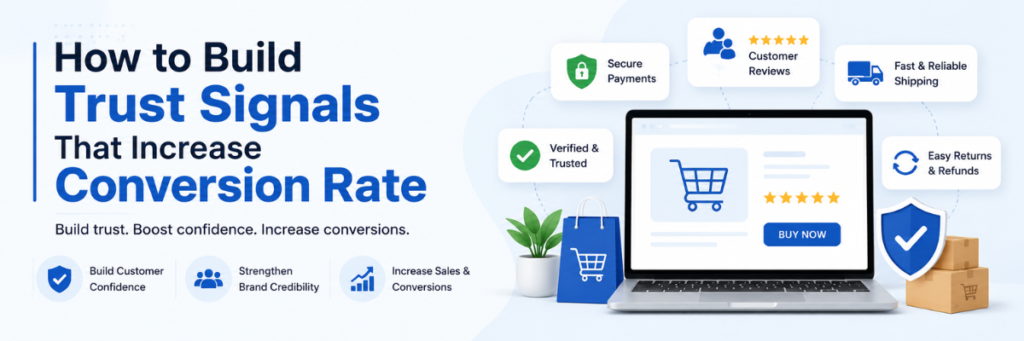
Trust signals are the small but powerful elements that reduce buyer hesitation and make customers feel secure while shopping. Whether you sell through Amazon, Walmart, Shopify, or multiple marketplaces, trust directly impacts purchase decisions. Businesses using professional Ecommerce account management services often improve conversions faster because their stores are optimized around customer confidence, credibility, and buying psychology.
This blog explains how trust signals influence customer behavior and how brands can use them effectively to increase sales and long-term customer loyalty.
Why Trust Signals Matter in Ecommerce
Online shoppers cannot physically inspect products before purchasing. Because of this, customers look for reassurance before placing an order. Trust signals help eliminate uncertainty and create confidence in your brand.
When shoppers trust your business, they are more likely to:
- Complete purchases
- Spend more per order
- Return for repeat purchases
- Recommend your brand to others
- Leave positive reviews
A weak trust structure often leads to abandoned carts, low engagement, and poor conversion performance.
Product Reviews and Ratings
One of the strongest trust signals in ecommerce is customer feedback. Buyers trust other customers more than marketing claims.
Positive reviews help validate product quality, shipping reliability, and overall customer satisfaction. Reviews also create social proof, showing that real people have successfully purchased and used the product.
Best Practices for Reviews
- Display verified customer reviews prominently
- Include photo and video reviews when possible
- Respond professionally to negative reviews
- Avoid fake or manipulated reviews
- Encourage post-purchase feedback through email automation
A well-managed review strategy is a core part of successful marketplace account management service operations because marketplaces prioritize listings with strong customer engagement.
Secure Payment and Checkout Experience
Customers hesitate when payment systems look outdated or unsafe. A professional checkout experience improves trust immediately.
Important Checkout Trust Elements
- SSL certificate and HTTPS security
- Trusted payment gateways
- Multiple payment methods
- Transparent pricing
- Clear shipping costs
- Easy return policy visibility
Complicated checkout systems increase cart abandonment. Simplifying the buying process improves conversion rates significantly.
Professional Product Images and Videos
Low-quality visuals reduce customer confidence instantly. High-resolution product photography creates a professional appearance and improves perceived product value.
Effective Visual Trust Signals
- White background product images
- Lifestyle usage photos
- Close-up detail shots
- Size comparison images
- Product demonstration videos
- Packaging visuals
Customers want clarity before purchasing. Professional visuals reduce confusion and increase buying confidence.
Transparent Shipping and Return Policies
Customers want to know what happens after the purchase. Hidden policies create distrust and increase hesitation.
What Customers Expect
- Estimated delivery dates
- Tracking information
- Return timelines
- Refund process details
- Exchange options
- Customer support availability
Transparency reduces anxiety during the purchase process and improves overall user experience.
Strong Brand Identity
A consistent brand appearance builds familiarity and authority. Brands that look professional are naturally trusted more by customers.
Elements of a Trustworthy Brand
- Consistent logo usage
- Clean website design
- Professional product descriptions
- Consistent colors and fonts
- Branded packaging
- Organized navigation structure
Businesses investing in e-commerce account management often focus heavily on maintaining brand consistency across all marketplaces and customer touchpoints.
Social Proof Beyond Reviews
Customers also trust brands that appear active and recognized online.
Additional Social Proof Examples
- Social media engagement
- User-generated content
- Influencer collaborations
- Press mentions
- Customer testimonials
- Case studies
- Community activity
When customers see others interacting positively with your brand, their confidence increases naturally.
Clear Product Descriptions
Confusing product information creates uncertainty. Clear descriptions improve customer understanding and reduce purchase hesitation.
High-Converting Product Descriptions Include
- Product benefits
- Exact specifications
- Material information
- Usage instructions
- Compatibility details
- Dimensions and sizing
- Warranty information
Detailed listings reduce return rates and improve customer satisfaction.
Fast Website Performance
Website speed affects both trust and conversion rate. Slow-loading websites feel unreliable and frustrate users.
Website Performance Improvements
- Optimize image sizes
- Use fast hosting
- Reduce unnecessary scripts
- Improve mobile responsiveness
- Simplify page structure
Customers expect fast and smooth browsing experiences across all devices.
Customer Support Accessibility
Buyers feel more comfortable purchasing when support is easily available.
Effective Customer Support Signals
- Live chat
- Quick email responses
- FAQ sections
- Contact information visibility
- Support ticket systems
- WhatsApp or phone support
Responsive support builds long-term trust and encourages repeat business.
Marketplace-Specific Trust Optimization
Every marketplace has different trust-building factors.
Amazon Trust Factors
- Seller ratings
- Fast shipping
- A+ Content
- FBA badges
- Product reviews
Walmart Trust Factors
- Competitive pricing
- Delivery reliability
- Clear product specifications
Shopify Trust Factors
- Website design quality
- Payment security
- Brand authority
- Social proof
Professional Ecommerce account management services help brands optimize these trust factors according to each marketplace’s algorithm and buyer behavior.
How Trust Signals Improve Conversion Rate
Trust signals influence customer psychology throughout the purchase journey.
Key Conversion Benefits
- Lower cart abandonment
- Higher average order value
- Increased repeat customers
- Better customer retention
- Improved ad performance
- Higher marketplace ranking
- Stronger organic growth
Trust is not just about appearance — it directly affects revenue growth.
Final Thoughts
Modern ecommerce growth depends heavily on customer confidence. Products alone are no longer enough to generate sustainable sales. Brands must create an experience that feels secure, professional, and reliable at every stage of the buyer journey.
Strong trust signals improve both short-term conversions and long-term customer loyalty. From reviews and secure checkout systems to professional branding and responsive support, every trust element contributes to better marketplace performance.
Businesses that invest in strategic trust-building frameworks consistently outperform competitors in highly competitive ecommerce environments.