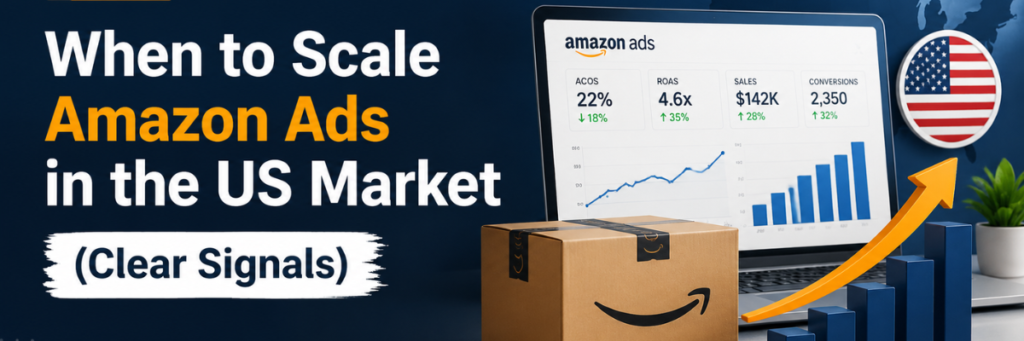
Running Amazon ads in the US market can quickly become expensive if scaling decisions are based only on emotions or temporary sales spikes. Many sellers increase budgets too early and end up with rising ACoS, unstable conversions, and wasted ad spend. The US marketplace is highly competitive, which means scaling Amazon ads requires data-backed signals, strong listing performance, and consistent campaign health. This is where professional Amazon advertising strategies become important for long-term marketplace growth.
Businesses using professional Amazon Ads Services often scale more efficiently because they focus on performance indicators instead of simply increasing budgets blindly. Understanding the right timing helps brands maintain profitability while increasing visibility, traffic, and conversions.
Why Scaling Amazon Ads Too Early Becomes Risky
Many sellers believe higher ad spend automatically means higher sales. In reality, scaling too soon can damage campaign performance. If the product listing is not conversion-optimized or the campaign lacks stable data, Amazon’s algorithm may push traffic that does not convert.
Common problems caused by early scaling include:
- Sudden increase in ACoS
- Reduced conversion rates
- Unstable keyword performance
- Higher CPC competition
- Poor ROAS results
- Inventory stock pressure
Before increasing ad budgets, sellers should first identify whether their campaigns are showing stable and healthy growth signals.
Clear Signals That Indicate You Should Scale Amazon Ads
1. Stable ACoS for 2–3 Weeks
A consistent Advertising Cost of Sale is one of the strongest signals for scaling. If your campaigns maintain profitable ACoS for at least 14–21 days, it indicates stable keyword performance and controlled spending.
For example:
- Target ACoS: 20%
- Actual ACoS maintained: 18–22%
- Conversion rate remains consistent
This shows the campaign is ready for gradual budget expansion.
Professional Amazon PPC Services usually recommend increasing budgets slowly rather than making aggressive jumps. A controlled increase helps maintain campaign stability.
2. High Converting Keywords With Consistent Sales
Scaling becomes safer when specific keywords consistently generate conversions and profitable sales.
Strong scaling indicators include:
- High click-through rate (CTR)
- Strong conversion rate
- Low wasted spend
- Consistent daily orders
- Profitable CPC
Instead of scaling all campaigns together, focus on proven keywords first. Top-performing search terms should receive increased budget allocation and stronger bidding support.
3. Organic Ranking Is Improving
One major advantage of Amazon advertising is its effect on organic visibility. If your product starts ranking organically for important keywords, it signals positive listing relevance and customer engagement.
Signs of healthy organic growth:
- Organic keyword ranking improvement
- Increased branded searches
- Higher repeat purchases
- More page sessions from non-ad traffic
When ads start supporting both paid and organic growth together, scaling becomes far more effective.
4. Product Listings Are Fully Optimized
Even the best Amazon Ads Management strategy will struggle if the product page is weak. Scaling only works properly when the listing is ready to convert incoming traffic.
Your listing should include:
- High-quality product images
- SEO-optimized title
- Strong bullet points
- Enhanced A+ Content
- Competitive pricing
- Positive customer reviews
If conversion rates remain low, increasing ad budgets will only increase wasted spending.
5. Inventory Levels Are Stable
Inventory is one of the most overlooked scaling factors in the US market. Scaling ads without enough stock can hurt rankings and advertising efficiency.
Before scaling:
- Ensure inventory can handle increased demand
- Monitor replenishment timelines
- Prepare for seasonal traffic spikes
- Avoid stock-outs during campaign growth
Running out of inventory after aggressive ad scaling can negatively impact keyword ranking momentum.
6. Conversion Rate Is Higher Than Category Average
A strong conversion rate indicates that shoppers trust the listing and product offer.
Typical indicators include:
- Better-than-average conversion rate
- Lower bounce rate
- Increased add-to-cart activity
- Improved customer engagement
When conversion rates improve, Amazon’s system often rewards listings with better ad placement opportunities.
Best Practices for Scaling Amazon Ads in the US Market
Increase Budgets Gradually
Avoid doubling budgets overnight. Instead:
- Increase budgets by 15–25%
- Monitor performance for 3–5 days
- Scale based on stable metrics
Gradual scaling helps maintain campaign efficiency.
Separate Winning Campaigns
Create separate campaigns for:
- Top-performing keywords
- Branded keywords
- High-converting ASIN targeting
- Exact match winners
This improves control and budget allocation.
Monitor TACoS Instead of Only ACoS
Many experienced sellers now focus more on TACoS (Total Advertising Cost of Sale). TACoS shows how ads impact overall business growth, including organic sales.
Healthy scaling often results in:
- Stable or decreasing TACoS
- Growing total revenue
- Higher organic sales percentage
Common Mistakes Sellers Make While Scaling
Scaling During Unstable Performance
If performance changes daily, scaling becomes risky. Wait for stable data before increasing budgets.
Ignoring Listing Quality
Poor product pages cannot support aggressive advertising growth.
Increasing Bids Too Fast
High bid jumps may increase CPC without improving conversions.
Not Tracking Search Term Data
Search term reports reveal where real conversions happen. Ignoring them limits campaign optimization opportunities.
Final Thoughts
Scaling Amazon ads in the US market requires patience, strong campaign analysis, and conversion-focused optimization. The best time to scale is when campaigns show stable profitability, high-converting keywords, healthy organic growth, and strong listing performance.
Brands that use professional Amazon Ads Services, strategies often scale faster because they focus on performance signals rather than guessing. Smart scaling helps businesses grow revenue while maintaining long-term profitability in the competitive US marketplace.