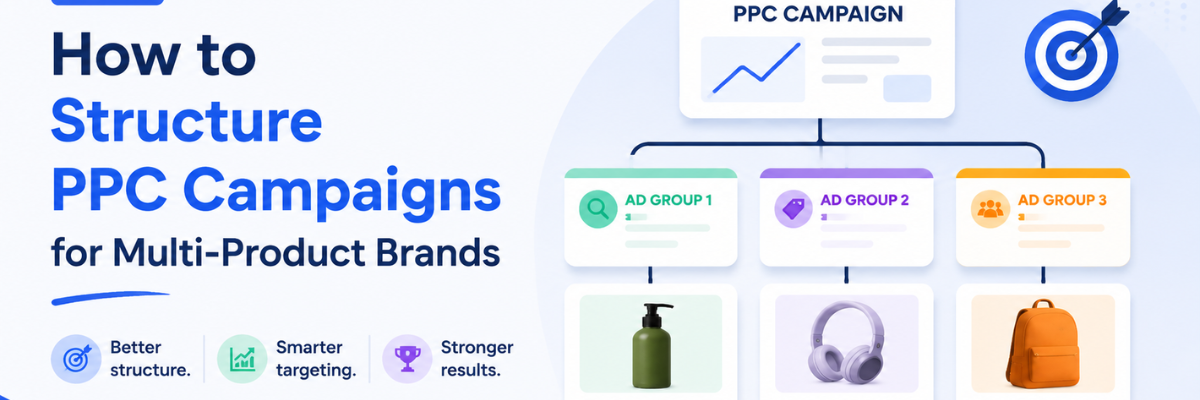
Managing PPC campaigns for a multi-product brand is not just about running ads — it’s about building a structured advertising system that keeps campaigns organized, scalable, and profitable. Whether your brand sells 10 products or 1,000 SKUs across marketplaces and ecommerce platforms, a strong campaign structure helps improve targeting, optimize ad spend, and increase overall sales performance.
Many ecommerce brands struggle because they place all products inside one campaign, making it difficult to track performance, manage budgets, and identify winning products. A proper PPC structure ensures every product category receives the right attention, budget allocation, and keyword targeting strategy.
Why Campaign Structure Matters for Multi-Product Brands
For brands with multiple products, poor campaign organization often leads to:
- Budget wastage on low-performing products
- Difficulty identifying profitable keywords
- High ACoS and lower ROAS
- Keyword overlap and internal competition
- Limited scalability
A structured PPC strategy helps separate products based on performance, category, and business goals, making campaign optimization much easier.
Organize Campaigns by Product Categories
One of the best ways to structure campaigns is by dividing products into categories or collections. Instead of putting every SKU into a single campaign, create separate campaigns for:
- Best-selling products
- New launches
- Seasonal products
- High-margin products
- Clearance or low-performing products
For example, a fashion brand can create separate campaigns for:
- Handbags
- Wallets
- Tote Bags
- Laptop Bags
- Accessories
This structure improves budget control and helps brands understand which category generates the best return.
Separate Campaigns by Match Type
A professional PPC structure should separate keywords by match type:
Exact Match Campaigns
These target high-converting keywords with strong purchase intent. Exact campaigns generally provide the best ROAS and lower wasted spend.
Phrase Match Campaigns
Phrase match campaigns help capture broader customer searches while still maintaining relevance.
Broad Match Campaigns
Broad campaigns are useful for keyword discovery and audience expansion, especially for scaling ecommerce brands.
Separating match types helps improve keyword control and simplifies optimization.
Create Dedicated Brand and Competitor Campaigns
Multi-product brands should also separate campaigns based on search intent:
Brand Campaigns
These campaigns target your own brand keywords and usually deliver high conversion rates at lower CPCs.
Competitor Campaigns
Competitor targeting campaigns help attract shoppers searching for similar products from competing brands.
This structure allows better performance tracking and budget allocation between defensive and growth-focused advertising strategies.
Use Product-Level Budget Allocation
Not every product deserves the same advertising budget. Multi-product brands should allocate budgets based on:
- Profit margins
- Product demand
- Conversion rate
- Inventory availability
- Seasonal trends
Best-selling products should receive aggressive scaling, while newer products may require testing budgets before expansion.
Separate Campaigns for Different Funnel Stages
Successful Ecommerce PPC Services strategies often divide campaigns based on customer buying stages:
Awareness Campaigns
These campaigns focus on reaching new audiences and increasing product visibility.
Consideration Campaigns
Retargeting campaigns and mid-funnel ads help engage shoppers who interacted with products previously.
Conversion Campaigns
These campaigns target high-intent customers ready to purchase.
A funnel-based structure improves conversion rates and customer acquisition efficiency.
Optimize Search Terms Regularly
Search term optimization is critical for Ecommerce Ads Management success. Regularly review search term reports to:
- Add high-converting keywords
- Remove irrelevant traffic
- Build negative keyword lists
- Reduce wasted ad spend
Brands that actively optimize search terms typically see better ROAS and improved campaign performance over time.
Track Performance at SKU Level
For multi-product brands, SKU-level analysis is extremely important. Monitor:
- Click-through rate (CTR)
- Conversion rate
- CPC
- ACoS
- ROAS
- Sales performance
This helps identify which products deserve more budget and which campaigns need restructuring.
Use Automation Carefully
Automation tools can help scale campaigns, but relying entirely on automation may reduce control. Combine automation with manual optimization for better results.
Brands using Ecommerce Ads Services often benefit from:
- Automated bidding adjustments
- Rule-based budget changes
- Performance alerts
- AI-powered keyword recommendations
However, human strategy and regular analysis remain essential.
Focus on Scalability
As your catalog grows, campaign structure becomes even more important. A scalable structure should:
- Be easy to manage
- Prevent keyword overlap
- Support future product launches
- Allow quick performance analysis
- Simplify optimization workflows
A clean PPC structure saves time while improving advertising profitability across marketplaces and ecommerce platforms.
Final Thoughts
Structuring PPC campaigns correctly is one of the most important steps for multi-product ecommerce brands. A well-organized campaign setup improves budget efficiency, keyword targeting, scalability, and overall advertising performance.
Brands investing in professional Ecommerce PPC Services strategies are better positioned to scale profitably while maintaining strong campaign control. With the right structure, ecommerce brands can reduce wasted spend, improve conversions, and maximize long-term marketplace growth.