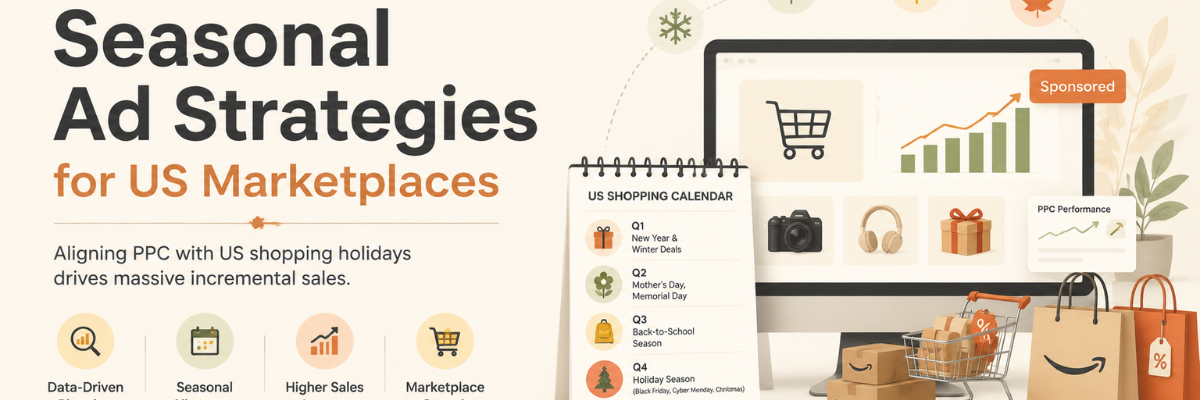
Seasonal marketing is one of the most powerful growth levers in ecommerce—especially in the US market where shopping behavior is heavily driven by holidays, deal events, and cultural moments. When PPC campaigns are aligned with these seasonal spikes, brands can unlock massive incremental revenue instead of relying on baseline traffic.
The key insight is simple but often ignored: timing your ads is just as important as optimizing them.
Why Seasonal PPC Matters in US Marketplaces
US shoppers don’t buy randomly throughout the year. Their purchase behavior clusters around predictable events such as Black Friday, Cyber Monday, Christmas, Memorial Day, Back-to-School season, and Prime Day.
This creates a unique opportunity for sellers on platforms like Amazon, Walmart, and other marketplaces. Instead of spending evenly throughout the year, smart advertisers concentrate budgets when demand is naturally higher.
This is where Amazon seasonal ads USA strategies become critical. Seasonal PPC campaigns allow brands to:
- Capture high-intent shoppers during peak buying periods
- Increase conversion rates with urgency-driven messaging
- Reduce wasted ad spend during low-demand periods
- Outperform competitors who don’t adjust budgets seasonally
Core Seasonal Events That Drive Marketplace Sales
To build an effective seasonal PPC strategy, you must first understand the US retail calendar.
1. Q1: New Year & Winter Clearance
Consumers focus on fitness, home improvement, and post-holiday deals. This is a great time for liquidation campaigns and category resets.
2. Q2: Mother’s Day, Memorial Day & Summer Prep
Gift-driven shopping peaks here. Beauty, home décor, fashion, and outdoor products perform strongly.
3. Q3: Back-to-School Season
One of the most consistent revenue drivers across US marketplaces. Electronics, apparel, stationery, and organization tools dominate.
4. Q4: Holiday Season (The Power Quarter)
Black Friday, Cyber Monday, and Christmas drive the highest conversion rates of the year. PPC competition increases, but so does buyer intent.
Building a Seasonal PPC Strategy That Works
A strong seasonal strategy is not just about increasing bids during holidays. It requires structured planning across three phases:
1. Pre-Season (2–6 Weeks Before)
This is where winners are made.
- Build keyword lists around seasonal intent (e.g., “holiday gifts,” “Black Friday deals”)
- Launch awareness campaigns early to warm up audiences
- Optimize product listings for seasonal relevance
- Increase ad testing to identify top-performing creatives
2. Peak Season (High Demand Window)
This is the execution phase.
- Increase bids on high-converting keywords
- Shift budget toward best-selling ASINs or products
- Use urgency-based ad copy (limited time, holiday deals, etc.)
- Monitor ACoS closely but prioritize revenue scaling
3. Post-Season (Retargeting & Recovery)
Most brands ignore this phase, but it’s extremely valuable.
- Retarget cart abandoners and viewers
- Run clearance or “last chance” campaigns
- Analyze performance data for next cycle improvement
- Maintain visibility for evergreen products
Aligning PPC with US Shopping Holidays
Successful advertisers don’t just “run ads”—they align their entire strategy with consumer psychology during holidays.
For example:
- During Black Friday, users expect discounts → CPC increases but conversion also spikes
- During Back-to-School, shoppers compare options → listing quality and reviews matter more
- During Christmas, emotional buying dominates → creative storytelling drives performance
When PPC is aligned with these behavioral shifts, campaigns naturally outperform.
This is the core principle behind modern marketplace marketing:
You don’t fight demand cycles—you ride them.
Common Mistakes Brands Make in Seasonal PPC
Even experienced sellers make costly mistakes:
- Keeping flat budgets throughout the year
- Starting campaigns too late (missing pre-season buildup)
- Ignoring post-season retargeting opportunities
- Using the same creatives year-round
- Over-optimizing for ACoS instead of total revenue growth
Avoiding these mistakes alone can significantly improve performance across marketplaces.
Final Thoughts
Seasonal PPC is not optional in competitive US marketplaces—it’s essential. The brands that win are not always those with the biggest budgets, but those who understand timing, intent, and consumer psychology.
When you align your strategy with US shopping holidays and structure your campaigns across pre-season, peak season, and post-season phases, your ad spend becomes significantly more efficient.
In the long run, Amazon seasonal ads USA strategies combined with intelligent marketplace marketing create compounding growth that outperforms evergreen-only advertising approaches.