Amazon Holiday Peak Fees 2026 (Oct 15 – Jan 14): What Sellers Pay Extra and How to Protect Margins
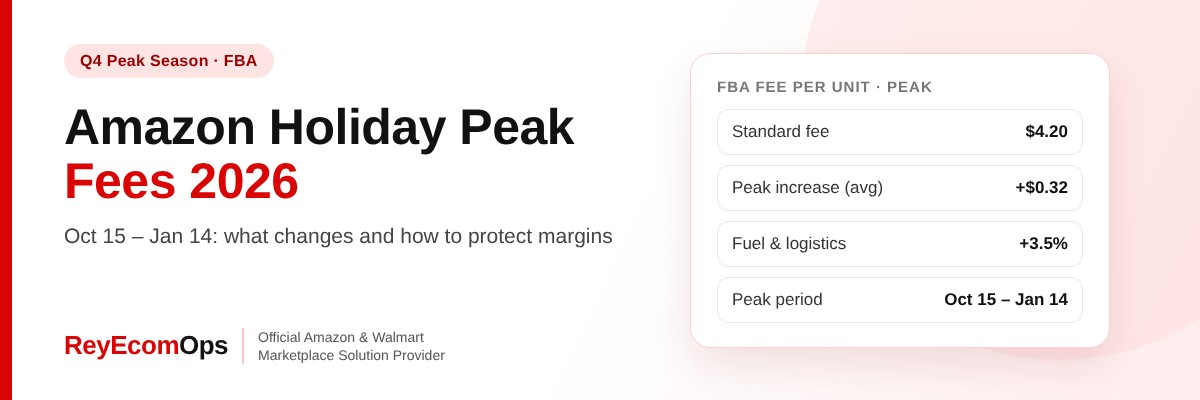
Q4 is when sellers make the most money, and it’s also when Amazon charges the most to fulfill each order. Amazon holiday peak fees raise the cost of every FBA unit shipped between mid-October and mid-January. If your prices and deals were set before the surcharge, your real margin may be lower than you think.
This guide explains the 2026 peak fee dates, what changes per unit, a worked margin example and the practical steps that protect your profit through Black Friday and January.
Quick answer: Amazon’s 2026 holiday peak fulfillment fees run from October 15, 2026 to January 14, 2027. Amazon kept the same structure as last year, averaging about $0.32 more per unit than non-peak rates, plus a 3.5% fuel and logistics surcharge. Recheck margin per product before deals and price cuts.
In this guide
- Amazon Holiday Peak Fees 2026: Dates and What Changes
- Why Peak Fees Matter More Than They Look
- Worked Margin Example
- Q4 Storage and Aged Inventory
- How to Protect Your Margins in Peak Season
- Other Q4 Costs to Plan For
- January: When Peak Fees Drop
- Peak Fee Checklist for Black Friday Week
- Which Products Are Hit Hardest by Peak Fees
- FBA or FBM in Peak Season?
- FAQs
1. Amazon Holiday Peak Fees 2026: Dates and What Changes
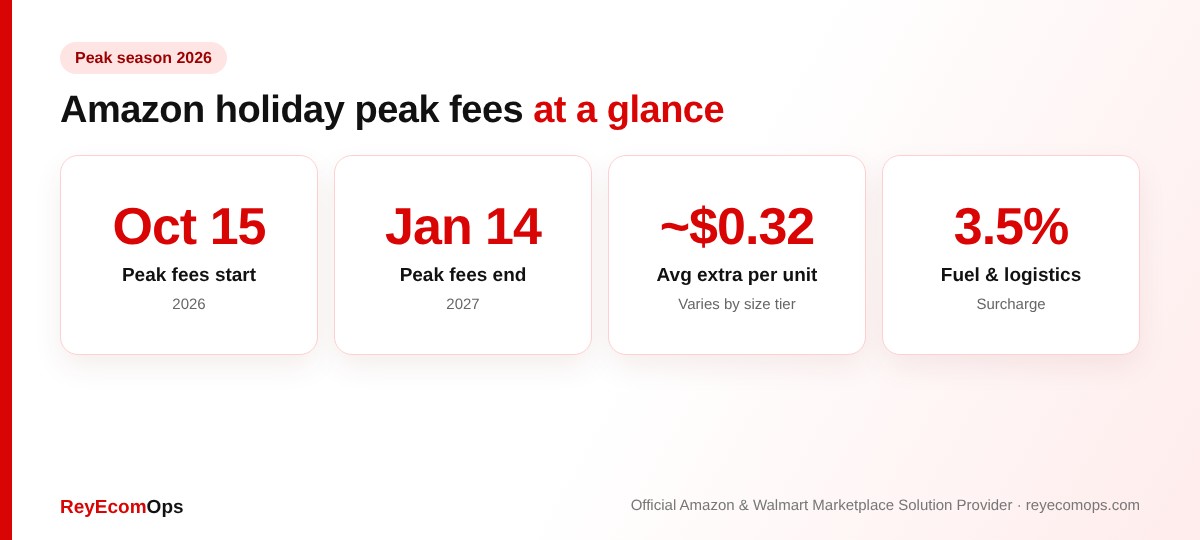
| Item | 2026 holiday season |
|---|---|
| Peak fulfillment fee period | October 15, 2026 – January 14, 2027 |
| Average increase vs non-peak | About $0.32 per unit |
| Fuel and logistics surcharge | 3.5% |
| Change from 2025 | Same structure, no new fee types announced |
| Black Friday Week inbound cut-off | Late October (already passed) |
The exact increase depends on your product’s size and weight tier, so check the fee preview for each ASIN in Seller Central. Small, low-priced items feel the increase most as a share of price.
2. Why Peak Fees Matter More Than They Look
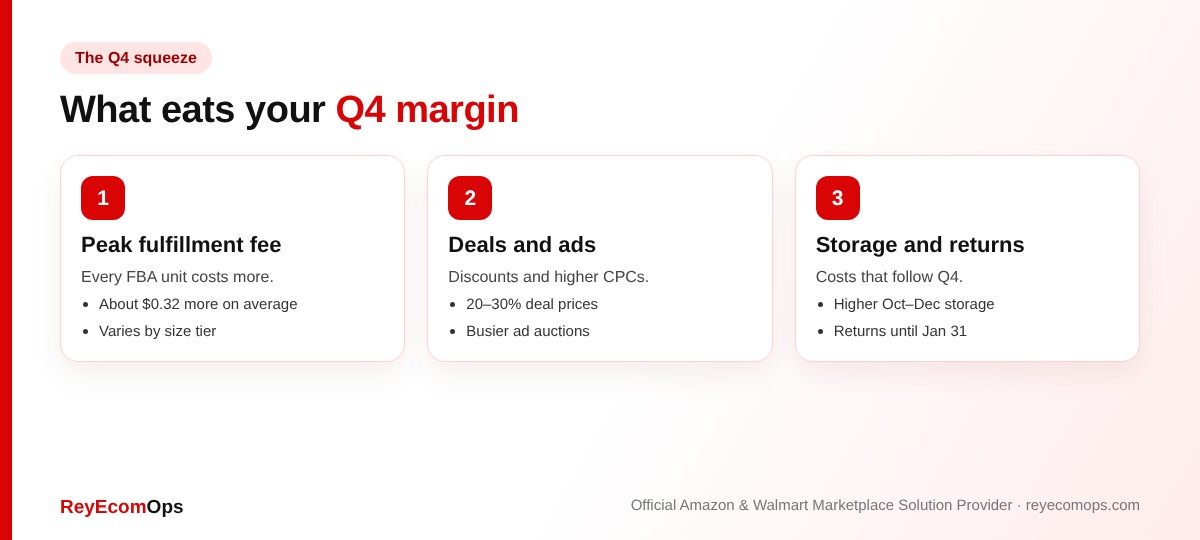
Thirty cents sounds small. But Amazon holiday peak fees land at the same time as deal discounts, higher ad costs and holiday returns. A product that earns $3.00 profit per unit in September can drop to $1.50 or less in Black Friday week after a 20% discount, a higher cost per click and the peak fee. On low-priced items, the margin can disappear completely.
3. Worked Margin Example
| Line | September | Black Friday week |
|---|---|---|
| Selling price | $24.99 | $19.99 (deal) |
| Referral fee (15%) | $3.75 | $3.00 |
| FBA fulfillment fee | $4.20 (example) | $4.52 (with ~$0.32 peak) |
| Product + inbound cost | $8.50 | $8.50 |
| Ad cost per unit | $3.00 | $3.60 |
| Profit per unit | $5.54 | $0.37 |
The fulfillment fee and ad costs here are examples. Before the surcharge the deal looked fine. After it, the product barely breaks even. That’s why every Q4 price change needs a fresh check in the free Amazon margin calculator.
Want to know which products still make money in Q4?
We’ll check your margins with peak fees on every top ASIN.
4. Q4 Storage and Aged Inventory
Monthly storage fees are higher from October to December than in the rest of the year. Inventory that doesn’t sell through the holidays carries those higher fees and, if it sits long enough, aged inventory surcharges in the new year.
- Send only the stock you expect to sell by early January.
- Check the inventory age report before sending more.
- Run a promotion or remove slow units before aged inventory charges apply.
5. How to Protect Your Margins in Peak Season
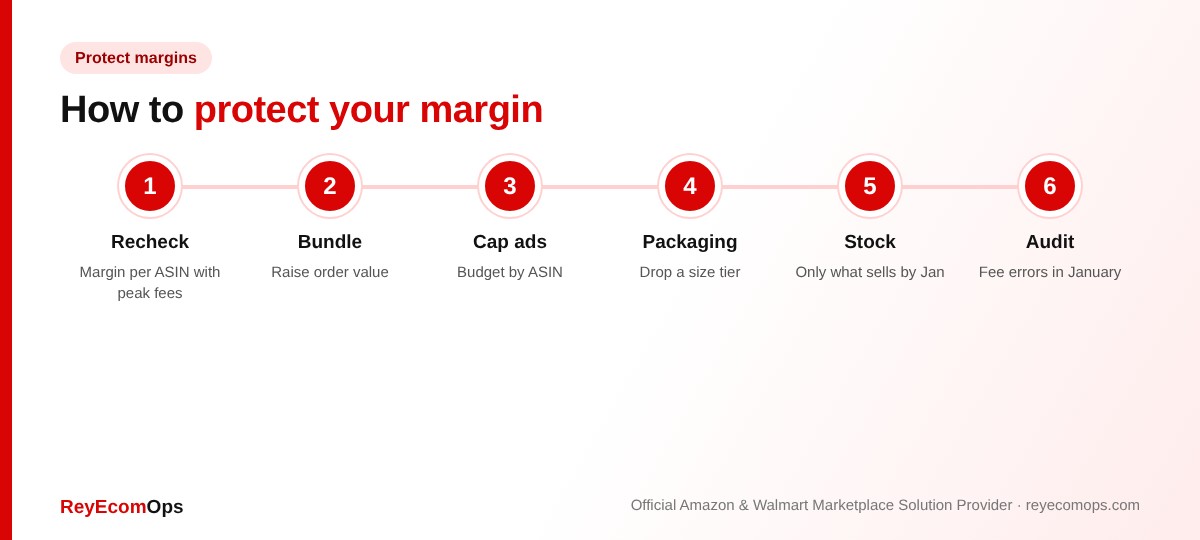
A. Recheck margin on every ASIN
Do it with peak fees included before setting any deal price. If you’re still planning deals, read our guide to Amazon Lightning Deals first.
B. Bundle low-priced items
One fulfillment fee covering a two-pack or gift set is far more efficient than two separate small orders.
C. Cap ad spend by ASIN
Don’t raise budgets across the board. Our Amazon ads service sets deal-day budgets per product based on margin.
D. Review packaging
A small change in box size can move a product into a cheaper size tier, saving money on every unit for the whole year.
E. Audit fees in January
Incorrect size or weight measurements can overcharge every unit. Check them as soon as the season ends.
6. Other Q4 Costs to Plan For
| Cost | When | What to do |
|---|---|---|
| Higher cost per click | November and December | Cap budgets by ASIN, pause low converters |
| Holiday returns | Until January 31, 2027 | Reserve cash; see our holiday return policy guide |
| Higher storage fees | October to December | Send only what will sell |
| Aged inventory surcharges | From the new year | Clear slow stock early |
7. January: When Peak Fees Drop
From January 15, 2027, standard fulfillment fees return. Use January to audit Q4: check that you were charged the right fee tier, file claims for lost or damaged units and clear aged stock. Our FBA reconciliation service finds fee errors and reimbursements you can still claim.
8. Peak Fee Checklist for Black Friday Week
- Open the fee preview for your top 20 ASINs.
- Recalculate profit per unit at every planned deal price.
- Remove deals that turn negative after Amazon holiday peak fees.
- Set ad budgets per ASIN, not per account.
- Check stock cover so you don’t overstock into January storage.
- Book a January fee audit.
For year-round pricing and fee management, see our Amazon account management services.
9. Which Products Are Hit Hardest by Peak Fees
| Product type | Why peak fees hurt | What to do |
|---|---|---|
| Low-priced small items (under $15) | The fee is a large share of the price | Bundle or raise the price slightly |
| Heavy or oversize items | Size-tier increases are larger in dollars | Check packaging, consider FBM for some orders |
| Deal-heavy best sellers | Discount plus peak fee plus higher CPC | Recheck every deal price |
| Slow movers | Higher storage on top of peak fees | Don’t restock before January |
Amazon holiday peak fees affect every FBA product, but the four groups above need a closer look before Black Friday week. For low-priced items, even one bundle option can turn a breakeven product back into a profitable one.
10. FBA or FBM in Peak Season?
Some sellers move a few SKUs to merchant fulfillment in Q4 to avoid peak fees. That only works if you can ship on time. A rising Late Shipment Rate costs more than thirty cents a unit. If you do split fulfillment, follow the steps in our late shipment guide to keep your rate under 4%.
Key takeaways
- Amazon holiday peak fees apply from October 15, 2026 to January 14, 2027.
- They average about $0.32 more per unit, plus a 3.5% fuel and logistics surcharge.
- Combined with deals and higher CPCs, they can wipe out thin margins.
- Bundle, cap ads by ASIN and review packaging to protect profit.
- Audit fees and reimbursements in January.