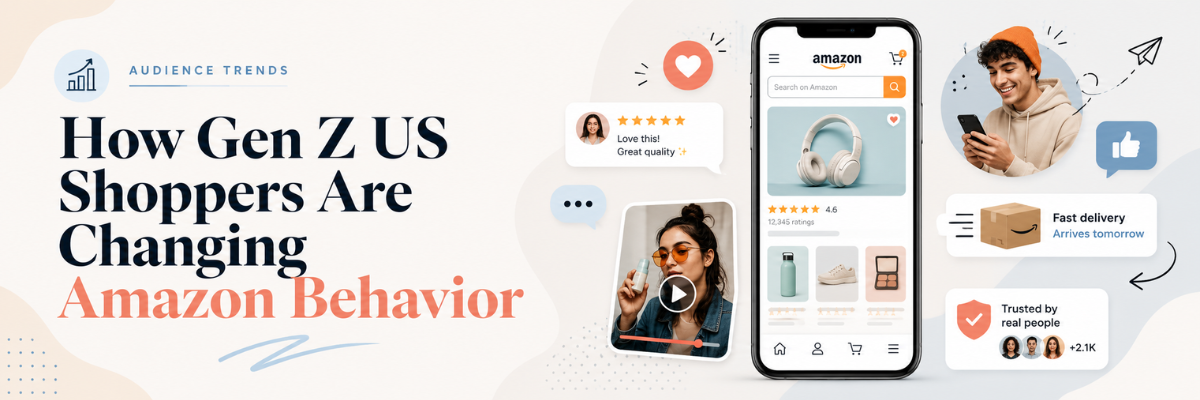
Gen Z shoppers are not using Amazon the same way older generations did. For years, Amazon buying behavior was mostly driven by price, product specs, fast delivery, and customer reviews. Those factors still matter, but younger US shoppers are adding a new layer to the buying journey: speed, authenticity, social proof, visual content, and brand trust.
For brands selling on Amazon, this shift is important. Gen Z shoppers are digital-first, mobile-first, and highly influenced by visual storytelling. They do not always want long technical explanations. They want to quickly understand what the product does, how it fits into their life, whether real people trust it, and whether the brand feels genuine.
This is why understanding Gen Z shopping USA behavior is no longer optional for Amazon sellers. It directly affects listing content, image strategy, brand stores, video content, reviews, advertising, and overall marketplace positioning.
Why Gen Z Shopping Behavior Matters on Amazon
Gen Z has grown up with smartphones, social media, short-form videos, influencer recommendations, and instant access to product comparisons. They are comfortable shopping online, but they are also highly selective. They can scroll past a product in seconds if it does not feel relevant, trustworthy, or visually appealing.
On Amazon, this means younger shoppers often make quick decisions based on what they see first. Product images, videos, review quality, delivery speed, and brand presentation can influence them before they even read the full product description.
Amazon consumer trends are moving toward a more visual and trust-based shopping experience. Sellers who still rely only on keyword-heavy titles and basic product photos may struggle to connect with this audience.
1. Gen Z Values Speed and Convenience
Fast delivery has always been one of Amazon’s strongest advantages, but for Gen Z shoppers, convenience is not just a bonus. It is an expectation.
Younger US buyers are used to instant results. They want quick search results, easy comparison, simple checkout, fast shipping, and clear return options. If a listing creates confusion, delays, or uncertainty, they may move to a competitor within seconds.
For Amazon sellers, this means the buying journey must feel effortless. Product titles should be clear. Bullet points should answer key questions quickly. Images should show the product benefits at a glance. Shipping and return information should be easy to understand.
A Gen Z buyer may not spend several minutes reading every detail. They want to know quickly:
Is this product right for me?
Can I trust it?
Will it arrive fast?
Does it look like what I need?
If the answer is not clear, the sale may be lost.
2. Authenticity Matters More Than Perfect Marketing
Gen Z shoppers are highly aware of over-polished advertising. They can quickly sense when a brand feels fake, exaggerated, or disconnected from real customer needs.
On Amazon, authenticity shows up in several ways. Real customer reviews, lifestyle images, user-generated content, honest product descriptions, and transparent brand messaging all help build trust.
Younger shoppers do not always expect a product to be perfect. In fact, listings that feel too polished or unrealistic may create doubt. They want to see how the product works in real life, what actual buyers are saying, and whether the brand communicates honestly.
For Amazon brands, this means avoiding exaggerated claims and focusing on clear, believable benefits. Instead of saying a product is “the best ever,” explain what makes it useful, practical, comfortable, durable, or easy to use.
Authenticity also applies to review management. Gen Z shoppers often read negative reviews to understand possible product issues. A thoughtful brand response can actually build confidence because it shows accountability.
3. Visual Storytelling Is Becoming a Major Conversion Driver
One of the biggest Amazon consumer trends is the growing importance of visual content. Gen Z shoppers are highly visual because they are used to platforms like TikTok, Instagram, YouTube Shorts, and Pinterest.
This changes how Amazon listings should be built. Product photos cannot be basic anymore. They need to tell a story.
Strong Amazon visual storytelling may include:
Lifestyle images showing the product in real use
Infographics explaining key benefits
Short product videos
Before-and-after visuals
Size and usage comparison images
A+ Content with brand story and product highlights
Brand Store pages with a clean shopping experience
For Gen Z shoppers, visuals often communicate faster than text. A strong image can answer a question before the buyer reads the bullet points. A short video can show product quality, texture, function, or scale more effectively than a paragraph.
Brands that invest in better Amazon creatives are more likely to hold attention and improve conversion.
4. Product Specs Still Matter, But Benefits Matter More
Older Amazon listings often focused heavily on technical details. Dimensions, materials, features, specifications, and compatibility are still important, especially for certain categories. However, Gen Z shoppers often care more about how the product fits into their lifestyle.
They do not just want to know what the product is. They want to know why it matters.
For example, instead of only saying:
“Made with lightweight material”
A stronger Gen Z-focused message would be:
“Lightweight design makes it easy to carry every day.”
Instead of only saying:
“Includes long-lasting formula”
A more benefit-driven version would be:
“Designed to stay fresh through work, errands, and daily routines.”
The difference is emotional connection. Gen Z shoppers respond better when product benefits feel practical, relatable, and lifestyle-focused.
Amazon sellers should still include important specs, but they should translate those specs into clear customer benefits.
5. Social Proof Has More Influence Than Brand Claims
Gen Z shoppers trust people more than polished brand statements. Reviews, ratings, customer photos, influencer content, and real-life product demonstrations all influence buying decisions.
On Amazon, this makes social proof extremely powerful. A product with strong reviews, detailed customer feedback, and real buyer images can feel more trustworthy than a listing with only brand-created content.
Sellers should focus on building review quality, not just review quantity. Helpful reviews that mention product experience, use cases, pros, cons, and customer satisfaction can improve trust.
Amazon brands can also use social proof in A+ Content and Storefront messaging by highlighting customer use cases, product popularity, and real lifestyle applications without making unsupported claims.
For Gen Z, the question is not only “What does the brand say?” It is also “What are real people saying?”
6. Mobile-First Shopping Is Changing Listing Design
Gen Z shoppers often browse and buy from mobile devices. This means Amazon listing content must be easy to understand on smaller screens.
Long paragraphs, crowded images, and unclear visuals can reduce engagement. Mobile-first listing design should be simple, clean, and easy to scan.
Amazon sellers should focus on:
Clear main product image
Readable infographic text
Short, benefit-led bullet points
Strong first three images
Easy-to-understand comparison charts
Clean A+ Content layout
Simple brand messaging
On mobile, attention is limited. The most important selling points should appear early in the listing. If the first few images and bullet points do not communicate value, many shoppers will not continue scrolling.
7. Gen Z Responds to Brands With Personality
Gen Z shoppers often connect with brands that feel human. They prefer brands with a clear voice, relatable messaging, and a sense of identity.
On Amazon, this can be shown through Brand Store design, A+ Content, product videos, and consistent visual language. A brand does not need to be loud or trendy, but it should feel clear, modern, and relatable.
For example, a beauty brand can use soft lifestyle imagery, routine-based messaging, and real-use benefits. A home brand can focus on comfort, space transformation, and everyday living. A fitness brand can show motivation, progress, and practical product use.
The key is to make the brand feel more than just a product seller. Gen Z wants to understand the story, purpose, and lifestyle behind the product.
8. Price Still Matters, But Value Matters More
Gen Z shoppers are often budget-conscious, but they are not always looking for the cheapest option. They look for value.
Value can mean quality, durability, convenience, design, ethical positioning, strong reviews, or better overall experience. On Amazon, this means sellers must explain why the product is worth the price.
If a product is premium, the listing should justify the price through quality visuals, clear benefits, strong reviews, and brand credibility. If a product is affordable, the listing should highlight practicality, reliability, and everyday usefulness.
Simply lowering the price is not always the best strategy. A better approach is to improve perceived value through stronger content and trust signals.
9. Short-Form Video Is Influencing Amazon Expectations
Gen Z is used to learning about products through short videos. Even when they shop on Amazon, they often expect product content to feel quick, visual, and easy to understand.
Amazon sellers can use video content to show:
How the product works
How it looks in real life
How it compares in size
How to use it
What problem it solves
Why it fits daily life
A short, clear product video can reduce hesitation and increase confidence. It can also help answer common questions before the buyer leaves the listing.
This is especially useful for beauty, fashion, home, wellness, electronics, accessories, and lifestyle products.
10. What Amazon Sellers Should Do Next
To adapt to Gen Z shopping USA behavior, Amazon sellers need to rethink their content strategy. Traditional listing optimization is still important, but it should be combined with stronger creative storytelling and trust-building.
Here are key actions sellers should take:
Optimize listings for mobile shoppers.
Use lifestyle images that show real product use.
Add short videos where possible.
Keep bullet points clear and benefit-focused.
Build A+ Content that tells a brand story.
Show practical value, not just product features.
Encourage authentic customer reviews.
Use clear, honest, and relatable messaging.
Make the Brand Store visually engaging.
Track conversion performance and update content regularly.
The goal is not just to rank on Amazon. The goal is to connect quickly, build trust, and convert attention into sales.
Final Thoughts
Gen Z is changing how people shop on Amazon. Younger US buyers want speed, authenticity, visual storytelling, social proof, and easy shopping experiences. They do not want to work hard to understand a product. They want the value to be clear from the first impression.
For Amazon sellers, this creates a major opportunity. Brands that adapt their listings, visuals, reviews, videos, and messaging for younger shoppers can stand out in a crowded marketplace.
The future of Amazon consumer trends is not only about keywords and product specs. It is about trust, clarity, lifestyle relevance, and content that feels real.
Sellers who understand this shift will be better positioned to attract Gen Z shoppers, improve conversions, and build long-term marketplace growth.