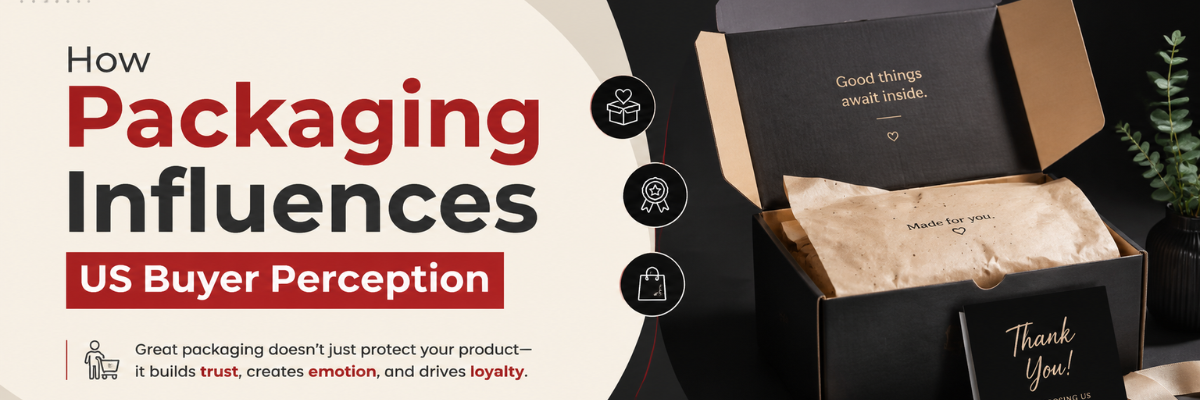
In the highly competitive US eCommerce landscape, packaging is no longer just a protective layer—it’s a silent marketing tool that directly shapes how customers perceive your brand. From Amazon storefronts to independent DTC brands, packaging often becomes the first physical interaction a buyer has with your product.
And that first impression? It can decide whether they become a one-time buyer or a loyal customer.
This is where packaging psychology plays a powerful role in shaping trust, perceived value, and long-term brand loyalty.
Why Packaging Matters More Than Ever in the US Market
US buyers are exposed to thousands of products daily across platforms like Amazon, Walmart, and Shopify stores. With so many options, they rely on visual and emotional cues to decide what feels “premium” or “trustworthy.”
Packaging acts as that cue.
A well-designed box or unboxing experience communicates:
- Product quality before the product is even used
- Brand professionalism and trust
- Emotional value beyond price
This is especially critical for brands focused on Amazon packaging strategy USA, where competition is intense and differentiation is minimal at the product level.
The Psychology Behind Packaging Decisions
Consumers don’t just buy logically—they react emotionally first.
Here’s what happens in the buyer’s mind when they receive a product:
1. First Impression Bias
Within seconds of seeing the package, the brain assigns a quality level.
- Premium box → “This must be high value”
- Cheap or generic packaging → “Probably average product”
This is why luxury brands invest heavily in tactile materials and clean design.
2. The “Unboxing Reward Effect”
Unboxing triggers a dopamine response similar to opening a gift.
When packaging feels intentional and layered:
- It increases excitement
- It strengthens emotional connection
- It enhances perceived product value
This emotional reward loop is one of the strongest drivers of repeat purchases.
3. Perceived Brand Storytelling
Packaging communicates brand identity without words.
Elements like:
- Typography
- Color palette
- Material texture
- Box structure
All contribute to how customers interpret your brand personality—minimalist, luxury, eco-friendly, or mass-market.
Premium Unboxing Experience = Higher Loyalty + Social Shares
One of the strongest modern eCommerce behaviors is sharing unboxing experiences on social media.
When packaging feels premium:
- Customers are more likely to post on Instagram, TikTok, or YouTube
- Your brand gains free organic reach
- Social proof increases trust for new buyers
This directly connects packaging psychology with organic marketing growth.
A strong unboxing experience doesn’t just retain customers—it turns them into promoters.
Key Elements of High-Converting Packaging in US eCommerce
If you’re optimizing for ecommerce brand management, these are essential packaging elements:
1. Minimal but Premium Design
US consumers prefer clean, modern aesthetics over cluttered visuals.
2. Strong Brand Consistency
Logo, colors, and tone should match your website and ads.
3. Protective but Elegant Structure
Packaging should feel secure and premium—not bulky or cheap.
4. Personalized Touchpoints
Small inserts like thank-you notes or QR codes increase emotional connection.
5. Shareability Factor
Design packaging that “looks good on camera” to encourage social sharing.
Amazon Packaging Strategy USA: Why It’s Different
Selling on Amazon adds unique packaging challenges:
- FBA compliance requirements
- Cost optimization pressures
- Standardization risks (many brands look identical)
This makes packaging one of the few remaining differentiation tools.
Brands that win on Amazon often:
- Use custom inserts or branded interiors
- Optimize unboxing flow (layered experience)
- Balance cost vs premium perception
Even small improvements in packaging can significantly improve review rates and repeat purchases.
The Business Impact of Better Packaging
Strong packaging psychology leads to measurable results:
- Higher perceived product value
- Increased repeat purchase rate
- More organic social media exposure
- Better customer reviews
- Stronger brand recall
In many cases, improving packaging alone can increase conversion rates without changing the product itself.
Final Thoughts
In modern eCommerce, packaging is no longer an afterthought—it’s a growth lever.
The brands that understand packaging psychology don’t just ship products; they create experiences. And those experiences directly influence how US buyers perceive value, trust, and brand identity.
If you’re serious about scaling in competitive marketplaces, investing in Amazon packaging strategy USA and strong ecommerce brand management isn’t optional—it’s essential.