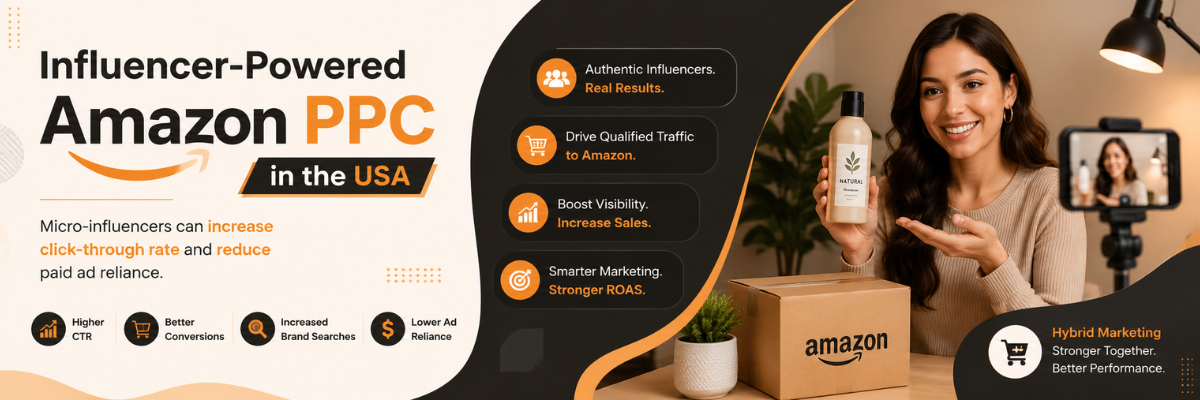
The landscape of Amazon advertising is becoming more competitive every year. Rising cost-per-click (CPC), increasing competition, and evolving customer behavior mean brands can no longer depend on paid advertising alone. To maximize return on ad spend (ROAS), businesses are combining Amazon PPC with influencer marketing to create a high-performing hybrid strategy.
Micro-influencers, in particular, are proving to be valuable partners because they build authentic trust with niche audiences. When integrated with Amazon PPC campaigns, they generate higher click-through rates (CTR), improve conversion rates, and reduce long-term reliance on paid advertising.
This guide explains how Amazon influencer marketing USA works alongside PPC campaigns and why businesses are increasingly turning to professional ecommerce account management services to execute this strategy successfully.
Why Amazon PPC Alone Is No Longer Enough
Amazon PPC remains one of the fastest ways to generate product visibility, but relying solely on paid traffic comes with challenges:
- Rising CPC across competitive categories
- Increased advertising competition
- Lower organic visibility without external traffic
- Growing customer acquisition costs
- Limited brand awareness outside Amazon
As advertising costs continue to rise, brands need additional traffic sources that strengthen PPC performance rather than replace it.
That is where hybrid marketing becomes valuable.
What Is Hybrid Marketing?
Hybrid marketing combines multiple customer acquisition channels into one unified strategy.
For Amazon sellers, this often means combining:
- Amazon Sponsored Products
- Sponsored Brands
- Sponsored Display Ads
- Micro-influencer campaigns
- Social media content
- User-generated content (UGC)
- Email marketing
- SEO
- Brand Store optimization
Instead of depending on one traffic source, every marketing channel works together to increase conversions and lower customer acquisition costs.
Why Micro-Influencers Work So Well
Unlike celebrity influencers, micro-influencers typically have highly engaged communities that trust their recommendations.
Higher Audience Trust
Followers view recommendations as genuine rather than promotional, leading to stronger buying intent.
Better Engagement Rates
Micro-influencers usually generate higher engagement compared to larger creators because their communities are more interactive.
Affordable Campaign Costs
Brands can collaborate with multiple creators instead of investing heavily in a single influencer.
Niche Targeting
Micro-influencers often specialize in:
- Beauty
- Home décor
- Fitness
- Pet products
- Electronics
- Kitchen products
- Fashion
This makes audience targeting significantly more precise.
How Influencers Improve Amazon PPC Performance
Influencer marketing doesn’t replace Amazon PPC—it strengthens it.
Higher Click-Through Rate (CTR)
Influencer content creates curiosity before shoppers reach Amazon.
When consumers recognize your product from social media, they are far more likely to click your sponsored listing.
Higher CTR often improves ad efficiency and campaign performance.
Better Conversion Rate
Consumers arriving from trusted influencer recommendations already have purchase intent.
As a result:
- Higher conversions
- Better ROAS
- Lower wasted ad spend
- Improved campaign profitability
Increased Brand Searches
Influencer campaigns encourage shoppers to search specifically for your brand.
This creates:
- More branded keyword traffic
- Higher organic rankings
- Lower dependency on expensive generic keywords
Improved Social Proof
Influencer-generated content provides:
- Product demonstrations
- Lifestyle images
- Honest reviews
- Real-world usage
These assets increase customer confidence before purchase.
Building an Influencer-Powered Amazon PPC Strategy
Step 1 – Identify Your Target Audience
Before selecting influencers, clearly define:
- Customer demographics
- Interests
- Shopping behavior
- Product category
- Purchase intent
Audience alignment matters far more than follower count.
Step 2 – Partner with Relevant Micro-Influencers
Choose creators who genuinely fit your niche.
Look for:
- Authentic engagement
- Consistent posting
- High-quality content
- Audience interaction
- Brand alignment
Smaller creators with loyal audiences often outperform larger influencers.
Step 3 – Create Authentic Content
Allow influencers creative freedom.
Authentic content usually performs better than scripted advertisements.
Effective content formats include:
Product Demonstrations
Show the product solving a real problem.
Daily Routine Videos
Help customers imagine using the product.
Honest Reviews
Transparency builds credibility.
Before-and-After Content
Perfect for beauty, skincare, home improvement, and fitness products.
Step 4 – Align PPC Campaigns with Influencer Activity
Coordinate Amazon advertising during influencer promotions.
Increase budgets temporarily when campaigns launch to capture increased buying intent.
This synchronization improves overall campaign performance.
Step 5 – Retarget Interested Customers
Not every visitor purchases immediately.
Use:
- Amazon Sponsored Display
- Social media retargeting
- Email campaigns
to reconnect with shoppers who previously engaged with your product.
Measuring Success
Successful hybrid marketing requires tracking the right metrics.
Key KPIs include:
- Click-Through Rate (CTR)
- Conversion Rate
- Cost Per Click (CPC)
- Return on Ad Spend (ROAS)
- Advertising Cost of Sales (ACoS)
- Total Advertising Cost of Sales (TACoS)
- Brand Search Volume
- New-to-Brand Customers
- Organic Keyword Rankings
Together, these metrics provide a complete picture of campaign performance.
Common Mistakes to Avoid
Choosing Influencers Based Only on Followers
Large audiences do not always generate sales.
Engagement and audience relevance matter more.
Ignoring Amazon Listing Quality
Driving traffic to a poorly optimized listing wastes advertising dollars.
Your listing should include:
- SEO-optimized titles
- High-quality product images
- Informative bullet points
- A+ Content
- Strong product descriptions
Running Isolated Campaigns
PPC and influencer marketing should complement each other.
Disconnected campaigns often result in inconsistent messaging and lower conversions.
Failing to Measure Results
Without proper reporting, brands cannot identify what drives sales.
Track every campaign and optimize based on performance data.
Why Ecommerce Account Management Services Matter
Executing hybrid marketing requires expertise across multiple disciplines.
Professional ecommerce account management services help businesses:
- Optimize Amazon PPC campaigns
- Identify high-performing influencers
- Improve listing quality
- Track campaign performance
- Manage inventory during promotional periods
- Optimize Brand Stores
- Monitor advertising budgets
- Improve keyword rankings
- Scale profitable campaigns
This integrated approach ensures every marketing effort contributes to long-term growth.
The Future of Amazon Marketing in the USA
The future of Amazon growth belongs to brands that diversify their traffic sources.
Instead of relying solely on paid advertising, successful sellers combine influencer partnerships, engaging content, optimized listings, and data-driven PPC campaigns to create sustainable growth.
As Amazon becomes more competitive, hybrid marketing will continue to help brands lower advertising costs while building stronger customer relationships.
Conclusion
Amazon advertising remains one of the most effective ways to generate immediate visibility, but relying exclusively on PPC is becoming increasingly expensive. By combining paid campaigns with micro-influencer partnerships, brands can improve click-through rates, increase conversions, strengthen brand awareness, and reduce dependence on paid traffic over time.
A well-executed hybrid marketing strategy delivers long-term value by creating multiple customer acquisition channels that support one another. With the right planning and professional ecommerce account management services, businesses can maximize advertising efficiency while building a stronger, more recognizable brand in the competitive U.S. marketplace.