In the competitive US e-commerce landscape, pricing is more than just assigning a number to a product. It is a psychological strategy that directly influences buyer perception, conversion rates, and long-term profitability. Successful brands understand that consumers rarely make purely logical decisions. Instead, purchasing behavior is shaped by perception, emotional triggers, and comparison-based thinking. This is why pricing psychology has become a critical part of modern sales strategy across Amazon, Shopify, Walmart, and other online marketplaces.
Brands using professional Ecommerce account management services often integrate pricing psychology into their listing optimization, ad campaigns, and promotional structures to improve customer response and maximize revenue.
Understanding Pricing Psychology in Ecommerce
Pricing psychology refers to strategies designed to influence how customers perceive value. Instead of focusing only on product cost, businesses focus on how pricing feels to the customer.
In the US market, where consumers compare multiple options before buying, the right pricing structure can:
- Increase conversion rates
- Improve perceived product value
- Encourage larger purchases
- Reduce hesitation during checkout
- Strengthen brand positioning
Two of the most powerful pricing psychology techniques are charm pricing and anchoring.
What Is Charm Pricing?
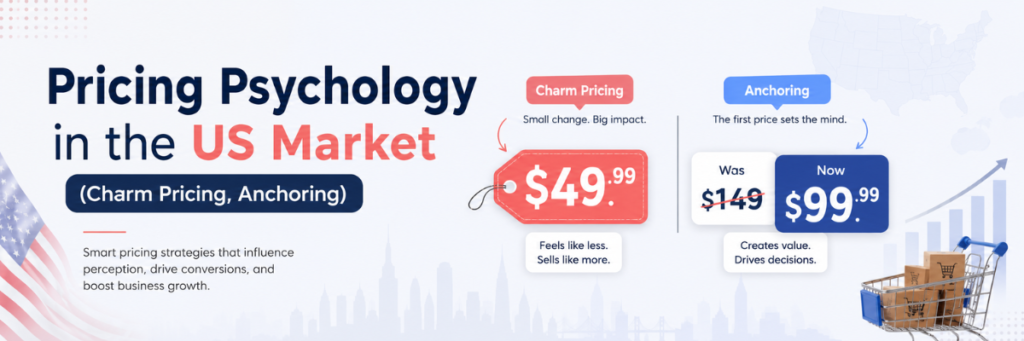
Charm pricing is the strategy of ending prices with numbers like .99, .95, or .97 instead of rounded whole numbers.
Examples:
- $49 instead of $50
- $199.99 instead of $200
- $27.95 instead of $28
Although the price difference is minimal, the psychological impact is significant.
Why Charm Pricing Works
Consumers naturally focus more on the first number they see. A product priced at $49.99 is mentally processed closer to $40 than $50, even though the difference is only one cent.
This technique works especially well in:
- Fashion ecommerce
- Beauty products
- Consumer electronics
- Marketplace listings
- Promotional offers
US shoppers are highly familiar with charm pricing, and it often creates the impression of getting a better deal.
Best Practices for Charm Pricing
- Use .99 pricing for mass-market products
- Use .95 or .97 for discount campaigns
- Avoid overusing charm pricing for luxury positioning
- Test different endings for different customer segments
Premium brands sometimes prefer rounded pricing like $200 instead of $199.99 because it creates a cleaner and more luxurious perception.
What Is Price Anchoring?
Anchoring is a pricing strategy where customers compare one price against another reference point before making a decision.
The first price customers see becomes the “anchor” that shapes their perception of value.
Common Examples of Anchoring
Original Price vs Sale Price
- Was $120
- Now $79
The original price makes the discounted price feel significantly more valuable.
Tiered Pricing
- Basic Plan — $29
- Standard Plan — $59
- Premium Plan — $99
The middle option often appears more attractive because customers compare it against the highest-priced option.
Bundle Anchoring
A bundle priced at $150 may appear affordable if individual products total $220 separately.
Why Anchoring Is Effective in the US Market
American consumers frequently compare products before purchasing. Ecommerce platforms encourage side-by-side comparison through:
- Product grids
- Competitor listings
- Sponsored ads
- Review sections
- Pricing filters
Anchoring helps guide customer perception before they compare alternatives.
Brands using advanced marketplace account management strategies often apply anchoring across:
- Amazon A+ Content
- Shopify product pages
- Walmart promotions
- Subscription models
- Product bundles
Combining Charm Pricing and Anchoring
The most effective ecommerce brands often combine both techniques.
For example:
- Original Price: $149
- Sale Price: $99.99
This creates:
- A strong anchor comparison
- A psychological “under $100” buying trigger
Together, these strategies can significantly increase click-through rates and conversions.
Pricing Psychology on Amazon
Amazon shoppers are extremely price-sensitive while also being highly influenced by perceived value.
Effective Amazon pricing strategies include:
- Limited-time discounts
- Strike-through pricing
- Coupons
- Quantity discounts
- “Frequently Bought Together” bundles
Professional ecommerce account management services help sellers optimize pricing structures while balancing:
- Profit margins
- Ad spend
- Competitor pricing
- Buy Box performance
- Customer perception
Pricing is not just about being cheaper. It is about appearing smarter and more valuable.
Mistakes Brands Make With Pricing Psychology
Over-Discounting
Constant discounts can reduce brand trust and perceived quality.
Confusing Pricing Structures
Too many pricing options can overwhelm buyers and reduce conversions.
Ignoring Brand Positioning
Luxury brands using excessive .99 pricing may weaken their premium image.
Competing Only on Price
Lower prices alone rarely build sustainable growth in crowded marketplaces.
How Smart Brands Use Pricing Psychology
Successful US ecommerce brands use pricing psychology strategically rather than randomly.
They:
- Test multiple price points
- Analyze conversion behavior
- Track competitor positioning
- Use data-driven discount strategies
- Align pricing with customer expectations
This is where expert ecommerce consulting and marketplace optimization become valuable.
Final Thoughts
Pricing psychology is one of the most powerful tools in ecommerce growth. Charm pricing influences emotional buying behavior, while anchoring shapes value perception before a purchase decision is made.
In the US market, where competition is intense and customer attention is limited, strategic pricing can become a major conversion advantage.
Brands that combine intelligent pricing structures with strong branding, optimized listings, and customer-focused positioning are more likely to achieve sustainable long-term growth.