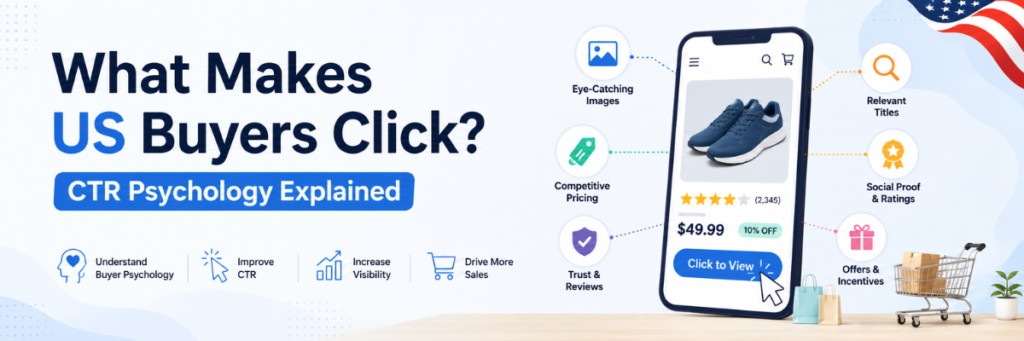
In the crowded world of U.S. e-commerce, getting impressions is only half the battle. The real challenge is convincing shoppers to click your product listing instead of a competitor’s. Click-through rate (CTR) is one of the most important metrics in marketplace performance because it reveals how effectively your product captures buyer attention. Strong CTR often leads to better rankings, lower advertising costs, and more sales. This is why many brands invest in professional ecommerce account management to optimize every element that influences buyer behavior.
What Is CTR and Why Does It Matter?
CTR stands for Click-Through Rate. It measures the percentage of people who click your listing after seeing it in search results.
CTR Formula:
CTR = Impressions / Clicks x 100
For example, if your product appears 10,000 times and receives 500 clicks, your CTR is 5%.
A high CTR tells marketplaces like Amazon, Walmart, and Temu that shoppers find your listing relevant and appealing. As a result, the platform may show your product more frequently.
The Psychology Behind Why US Buyers Click
American shoppers make quick decisions. In many cases, they scan listings for less than two seconds before deciding whether to click. Their choices are driven by trust, relevance, and perceived value.
1. First Image Creates Instant Judgments
Product images are often the strongest factor influencing CTR. U.S. buyers expect:
- High-resolution visuals
- Clean white backgrounds
- Clear product angles
- Lifestyle images showing practical use
- Infographics highlighting benefits
If the main image looks professional, buyers are more likely to trust the listing.
2. Titles Must Match Search Intent
Shoppers click when the title reflects exactly what they searched for. For example, if someone searches “organic green tea bags,” they are more likely to click a listing with that phrase prominently included.
Well-structured titles should include:
- Primary keyword
- Core product feature
- Quantity or size
- Unique selling point
This is one reason why businesses rely on E-commerce account management services to conduct keyword research and improve title relevance.
3. Pricing Influences Perceived Value
US buyers compare prices quickly. The lowest price does not always win. Instead, buyers look for the best balance between cost and perceived quality.
Listings with coupons, discounts, or visible savings often achieve higher CTR because they trigger urgency and value perception.
4. Review Count and Star Ratings Build Trust
Buyers naturally gravitate toward products with strong ratings and substantial reviews. A product with 4.7 stars and 2,000 reviews appears more trustworthy than one with only a few ratings.
Reviews reduce uncertainty and increase confidence.
5. Emotional Triggers Drive Attention
Certain elements create immediate emotional responses, including:
- “Best Seller” badges
- Limited-time deals
- Eco-friendly claims
- Premium packaging
- Satisfaction guarantees
These signals help products stand out in competitive search results.
How Search Intent Shapes CTR
US buyers typically search with a clear purpose. Their intent falls into three categories:
Informational Intent
The shopper is researching options.
Comparative Intent
The shopper is evaluating multiple products.
Purchase Intent
The shopper is ready to buy.
Your listing must align with the buyer’s stage in the decision-making process.
The Role of Mobile Shopping
A significant portion of U.S. shoppers browse and purchase using smartphones. On mobile, only the main image, price, rating, and part of the title are visible.
To improve CTR on mobile:
- Use bold, easy-to-understand images
- Place critical keywords early in titles
- Highlight pricing incentives
- Maintain strong ratings
How Marketplace Algorithms Reward High CTR
Marketplaces use CTR as a relevance signal. If more shoppers click your listing than competing products, your item is often rewarded with better visibility.
Benefits of improved CTR include:
- Higher organic rankings
- Lower cost-per-click
- Better ad efficiency
- Increased conversion opportunities
This makes marketplace account management services valuable for brands seeking sustainable growth.
Practical Strategies to Increase CTR
Upgrade Your Main Image
Invest in professional product photography.
Optimize Titles for US Search Behavior
Use real customer search terms.
Display Competitive Pricing
Include promotions when possible.
Strengthen Social Proof
Generate authentic reviews.
Test and Improve Continuously
Monitor listing performance and refine weak elements.
Common Reasons for Low CTR
If impressions are high but clicks remain low, the issue may include:
- Poor images
- Irrelevant titles
- Uncompetitive pricing
- Weak ratings
- Stronger competitors
Identifying the root cause is essential to improving performance.
Why Professional Management Improves Results
Optimizing CTR requires expertise in buyer psychology, marketplace algorithms, and data analysis. Brands that use ecommerce account management benefit from:
- Advanced keyword research
- Listing optimization
- Competitor analysis
- Advertising support
- Performance monitoring
These services ensure your products attract more qualified clicks and generate stronger returns.
Final Thoughts
US buyers click on listings that appear trustworthy, relevant, and valuable. Every detail—from your main image and title to pricing and reviews—affects this decision. Improving CTR is not just about design; it is about understanding how customers think.
With expert e-commerce account management services, brands can refine their listings, increase click-through rates, and turn marketplace traffic into profitable sales.